Quick Overview
| Detail | Information |
|---|---|
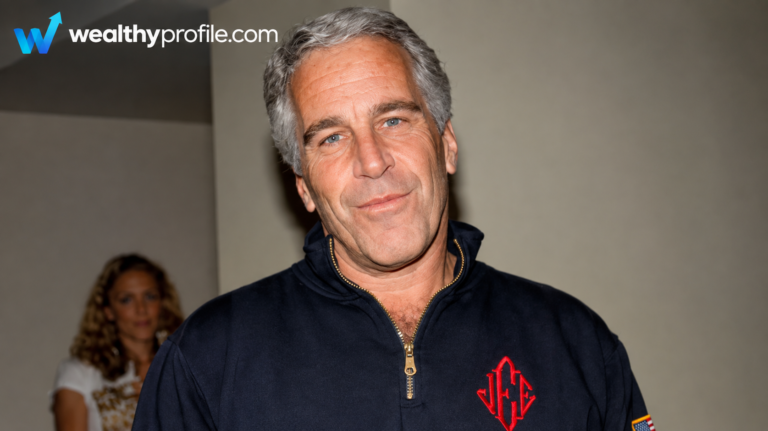
| Full Name | Jeffrey Edward Epstein |
| Date of Birth | January 20, 1953 |
| Place of Birth | Brooklyn, New York, United States |
| Date of Death | August 10, 2019 (aged 66) |
| Cause of Death | Suicide by hanging (official ruling) |
| Net Worth at Death | Approximately $578 million |
| Estate Value (September 2025) | Approximately $127.4 million |
| Primary Income Sources | Financial advisory fees, investment returns, money management |
| Key Clients | Les Wexner, Leon Black |
| Real Estate Portfolio | Six+ properties across five jurisdictions |
| Criminal Convictions | Solicitation of prostitution with a minor (2008); indicted for sex trafficking (2019) |
| Victim Settlements Paid | Over $290 million (estate and bank settlements combined) |
| Known For | Convicted sex offender, disgraced financier, mysterious wealth accumulation |
In this article17 sections
- 01How a Disgraced Financier Amassed $578 Million
- 02Early Life and Education
- 03The Bear Stearns Years and the Move to Wall Street (1976–1981)
- 04How Did Jeffrey Epstein Make His Money
- 05Leon Black and the $158 Million Payment
- 06Income Sources and Revenue Streams
- 07Jeffrey Epstein Real Estate Empire
- 08Criminal History
- 09Death at Metropolitan Correctional Center
- 10The 1953 Trust
- 11Estate Liquidation
- 12Jeffrey Epstein Estate Value 2026
- 13Banking Relationships
- 14Jeffrey Epstein Compared to Other Controversial Fortunes
- 15The Enduring Mystery
- 16Family and Personal Life
- 17Frequently Asked Questions (FAQs)
Jeffrey Epstein Net Worth 2026 — How a Disgraced Financier Amassed $578 Million
Jeffrey Epstein net worth 2026 is a question that has less to do with living wealth and everything to do with the slow, painful unwinding of an estate built on exploitation. When Epstein died in a Manhattan jail cell on August 10, 2019, federal prosecutors pegged his assets at approximately $578 million. Seven years later, that figure has been carved down by victim compensation payments, government settlements, property liquidations, legal fees, and tax obligations — leaving an estate that, as of September 2025, held roughly $127.4 million.
But the real question people keep asking is not what remains. It is how a college dropout from a working-class Brooklyn neighborhood accumulated over half a billion dollars in the first place — and whether the fortune was ever as real as it appeared on paper.
This article traces every documented dollar: the early career that launched Epstein from a high school math teacher to a Wall Street insider, the billionaire clients who funneled hundreds of millions into his accounts, the sprawling real estate empire that stretched from Manhattan’s Upper East Side to a private Caribbean island, and the ongoing legal proceedings that continue to drain the estate heading into 2026.
Early Life and Education — From Brooklyn to Bear Stearns
Jeffrey Edward Epstein was born on January 20, 1953, in Brooklyn, New York. His father, Seymour George Epstein, worked as a groundskeeper for the New York City Parks Department. His mother, Pauline “Paula” Stolofsky, was a school aide and homemaker. The family was of Lithuanian Jewish and Polish Jewish descent and lived in Sea Gate, a gated community at the western tip of Coney Island.
Epstein attended Public School 188 and Mark Twain Junior High School before enrolling at Lafayette High School in Bath Beach, Brooklyn. He was an exceptional math student who skipped two grades and graduated at just sixteen years old. From 1969 to 1971, he attended Cooper Union in Manhattan, taking advanced mathematics classes, but never completed a degree. He then studied mathematical physiology at the Courant Institute of Mathematical Sciences at New York University from 1971 to 1974, again leaving without graduating.
Despite lacking any college credential, Epstein landed a position as a mathematics and physics teacher at the Dalton School, a prestigious private school on Manhattan’s Upper East Side, in September 1974. He earned around $40,000 per year. Among his students was the son of Alan “Ace” Greenberg, chairman and CEO of the investment bank Bear Stearns. That connection changed the trajectory of Epstein’s life.
The Bear Stearns Years and the Move to Wall Street (1976–1981)
In 1976, Greenberg hired Epstein at Bear Stearns as a junior assistant in the options trading department. Epstein quickly distinguished himself and rose through the ranks, becoming a limited partner by 1980 at the age of twenty-seven — a position that earned him approximately $200,000 annually.
His tenure at Bear Stearns ended abruptly in 1981. Internal investigators flagged irregularities in Epstein’s lending practices, and he resigned. Rather than facing consequences that might have slowed another person down, Epstein founded his own firm, Intercontinental Assets Group, in August 1981. The firm specialized in recovering lost or stolen assets for governments and wealthy individuals, though details of its operations remain deliberately vague.
By 1988, Epstein had established J. Epstein & Company, a financial management firm with an unusual business model. He reportedly accepted only clients with a net worth exceeding $1 billion and charged fees based on a percentage of assets managed — an arrangement that, if true, would have placed him in an extraordinarily exclusive niche of the wealth management industry.
How Did Jeffrey Epstein Make His Money — The Les Wexner Connection
The single most important financial relationship in Epstein’s life was with Leslie Wexner, the billionaire founder and CEO of L Brands (the parent company of Victoria’s Secret, Bath & Body Works, and several other retail chains). The two met in 1986, and by 1991, Epstein had been granted sweeping power of attorney over Wexner’s finances.
Through his firm Financial Trust Company, Epstein managed Wexner’s wealth for over a decade. The arrangement generated approximately $200 million in advisory fees for Epstein between 2000 and 2006 alone. At its peak, the Financial Trust Company produced $300 million in total fees during this period, with Wexner accounting for the overwhelming majority of that revenue.
The Wexner relationship also provided Epstein with tangible assets. In 1989, Wexner purchased the massive Herbert N. Straus House at 9 East 71st Street on Manhattan’s Upper East Side for $13 million. Epstein moved into the property and, according to real estate records, acquired it from Wexner in 1998 for $20 million — though questions have persisted about whether Epstein ever actually paid the full amount. At 21,000 square feet, the townhouse became one of the largest privately owned residences in Manhattan.
In 2019, Wexner publicly stated that Epstein had “misappropriated vast sums of money” from him. He claimed to have discovered that Epstein had taken approximately $46 million without authorization. The relationship formally dissolved in 2007 after Epstein’s guilty plea in his Florida criminal case. In February 2026, Wexner testified under congressional subpoena that he had been “conned” by Epstein and denied knowledge of any criminal activity.
Leon Black and the $158 Million Payment
After the Wexner relationship ended, Epstein’s most lucrative client became Leon Black, the co-founder and then-chairman of Apollo Global Management, one of the world’s largest private equity firms.
In 2013, Epstein established the Southern Trust Company specifically to handle Black’s financial affairs. Through this entity, Black paid Epstein approximately $158 million in fees for tax and estate planning services between 2012 and 2017. When this payment became public in January 2021, Black defended it by telling investigators he was “so wealthy” he had not realized the total reached that amount.
An independent review commissioned by Apollo’s board concluded that while the fees were “substantial,” the tax savings Epstein generated for Black were legitimate and exceeded $1 billion. However, Black stepped down as CEO of Apollo in March 2021 and resigned as chairman shortly after — a departure that cost him hundreds of millions in future compensation.
The Southern Trust Company generated an additional $300 million in tax credits from the U.S. Virgin Islands Economic Development Authority through what federal prosecutors later described as “fraudulent misrepresentations” — a scheme that artificially inflated Epstein’s net worth through tax incentives he was arguably never entitled to receive.
Jeffrey Epstein Net Worth Breakdown — Income Sources and Revenue Streams
Between 1999 and 2018, Epstein’s two primary business entities — Financial Trust Company and Southern Trust Company — generated combined revenue exceeding $800 million. Here is a breakdown of the major income categories documented through court filings and financial records:
Financial Advisory Fees: Approximately $470 million. This includes $200 million from Les Wexner, $158 million from Leon Black, and the remainder from a small number of additional ultra-high-net-worth clients whose identities have never been fully disclosed.
Investment Portfolio Returns: Approximately $310 million in gains from his personal investment portfolio between 1999 and 2018, as reported in court filings.
Dividend Income: At least $360 million in dividends from his various business entities over the same period.
Tax Credits and Incentives: $300 million in U.S. Virgin Islands tax credits obtained through the Southern Trust Company — though much of this was later deemed fraudulent, and over $73 million was repaid to the Virgin Islands government.
Revenue After 2007: Following the end of his relationship with Wexner, the Financial Trust Company’s annual revenue dropped below $5 million per year, from 2007 through 2013. This sharp decline underscores how dependent Epstein’s legitimate income was on a single client.
Jeffrey Epstein Real Estate Empire — Properties Across Five Jurisdictions
At the height of his wealth, Epstein maintained one of the most unusual real estate portfolios in American history. His properties spanned Manhattan, Palm Beach, the U.S. Virgin Islands, New Mexico, and Paris.
Manhattan Townhouse — 9 East 71st Street
The crown jewel of Epstein’s portfolio was the Herbert N. Straus House, a seven-story Beaux-Arts limestone mansion originally built in 1933. Originally purchased by Les Wexner for $13 million in 1989, Epstein acquired the property in 1998 for $20 million. Federal prosecutors valued it at $77 million in 2019, while the city assessment placed it at $56 million.
At 21,000 square feet, the townhouse was reportedly the largest private residence in Manhattan. Its interior features became the subject of intense media scrutiny — investigators discovered a lead-lined bathroom equipped with closed-circuit television cameras, a heated sidewalk out front, and artwork that drew widespread attention during searches.
The estate sold the townhouse in March 2021 to Michael Daffey, a former Goldman Sachs executive, for approximately $51 million — roughly $39 million less than its original listing price of $88 million. The discount reflected both the property’s notoriety and the estate’s urgency to liquidate assets for victim compensation.
Palm Beach Mansion — 358 El Brillo Way
Epstein purchased his Palm Beach, Florida, estate in 1990. The 14,000-square-foot, six-bedroom property at 358 El Brillo Way sat in one of the most exclusive neighborhoods in the country. This was the property where many of the crimes that led to his 2008 conviction occurred.
The estate listed the Palm Beach mansion for $22 million and sold it in early 2021 for approximately $18.5 million to developer Todd Michael Glaser and partners. The buyers demolished the house, changed the address, and rebuilt on the lot — a common practice for properties associated with criminal notoriety.
U.S. Virgin Islands — Little Saint James and Great Saint James
Epstein purchased Little Saint James, a 75-acre private island in the U.S. Virgin Islands, for $7.95 million in 1998. Over two decades, he developed the island into a compound with a main residence, guest houses, a private dock, and structures that became globally infamous. In 2016, he purchased the neighboring 165-acre Great Saint James for over $20 million.
The estate listed both islands for a combined $125 million in 2022. They sold in May 2023 to Stephen Deckoff of SD Investments for $60 million — less than half the asking price. Under the terms of the estate’s $105 million settlement with the U.S. Virgin Islands government, a portion of the island sale proceeds was allocated directly to the territorial government.
Zorro Ranch — Stanley, New Mexico
The 7,500-acre Zorro Ranch near Stanley, New Mexico, was purchased by Epstein in 1993 for approximately $12 million. The sprawling property included a main residence, guest houses, an airplane hangar, and horse stables. It was listed for sale at $27.5 million in 2021.
The ranch sold in August 2023 for an undisclosed price to a newly registered LLC. Investigative reporting later identified the buyer as connected to the Huffines family of Texas.
Paris Apartments
Epstein owned seven apartment units near the Arc de Triomphe in Paris, valued at approximately $8.7 million in his estate filings. The Paris properties sold in 2022 for an estimated €10 million.
Additional Properties
Epstein also held a 50% ownership stake in American Yacht Harbour in Red Hook, U.S. Virgin Islands, acquired in 2007 alongside Trump associate Andrew Farkas. He previously owned a mansion near Columbus, Ohio, which he purchased from Les Wexner in 1992 and held until 1998.
Criminal History — From the 2008 Plea Deal to the 2019 Arrest
Epstein’s criminal history is central to understanding both his wealth and its eventual collapse. The Palm Beach Police Department opened an investigation into Epstein in 2005 after a parent reported that her fourteen-year-old daughter had been taken to his mansion and paid $300 for sexual acts.
In June 2008, Epstein pleaded guilty to a Florida state charge of soliciting prostitution with a minor. Under a controversial non-prosecution agreement negotiated with then-U.S. Attorney Alexander Acosta, Epstein served just thirteen months in a county jail — much of it on a work-release program that allowed him to spend twelve hours a day at his office. He was required to register as a sex offender for life, designated “level three” (the highest risk category).
On July 6, 2019, federal agents arrested Epstein at Teterboro Airport in New Jersey on new sex trafficking charges. A federal indictment alleged that he had trafficked dozens of underage girls through his Manhattan townhouse and Palm Beach mansion between 2002 and 2005. Prosecutors asked for no bail, describing him as an extreme flight risk and danger to the community. That request was granted.
Death at Metropolitan Correctional Center — August 10, 2019
On August 10, 2019, Epstein was found dead in his cell at the Metropolitan Correctional Center in lower Manhattan. The New York City medical examiner ruled the death a suicide by hanging. He was sixty-six years old.
The circumstances surrounding his death generated intense public scrutiny. Epstein had been placed on suicide watch after a previous incident in late July but was removed from that status days before his death. Two guards assigned to monitor his unit were later found to have been sleeping and falsifying records during the hours Epstein died. Both guards were charged with federal offenses but eventually entered deferred prosecution agreements.
The DOJ Office of Inspector General concluded in a June 2023 report that “serious failures” by Bureau of Prisons staff contributed to the circumstances of Epstein’s death but found no evidence contradicting the suicide ruling. In July 2025, the Justice Department confirmed that Epstein died by suicide and stated there was no evidence of a “client list” beyond those already publicly identified through court filings.
Epstein was buried at the IJ Morris Star of David Cemetery in Palm Beach Gardens, Florida, in a small, private ceremony.
The 1953 Trust — Epstein’s Last-Minute Estate Plan
Two days before his death, on August 8, 2019, Epstein signed a will that directed all assets into a newly created entity called “The 1953 Trust” — named after his birth year. The pour-over will named two executors: Darren Indyke, his personal attorney, and Richard Kahn, his accountant.
The trust structure was designed to shield the identities of beneficiaries and the distribution of assets from public view. Without the will, Epstein’s entire estate would have passed to his brother Mark Epstein under New York intestacy law. Mark received nothing under the trust.
According to court filings and investigative reporting, the 1953 Trust designated over $330 million in cash bequests to named beneficiaries. Among them were Karyna Shuliak, described as Epstein’s girlfriend, who was listed for $100 million plus multiple properties and a 32.73-carat diamond ring. Indyke was named for $50 million, Kahn for $25 million, and Ghislaine Maxwell — later convicted of sex trafficking charges — for $10 million. Mark Epstein’s children were designated $10 million in trust. Larry Visoski, Epstein’s longtime pilot, was named for $10 million. Cecile de Jongh, the former first lady of the U.S. Virgin Islands, was designated for $1 million.
Because the estate’s total remaining value falls far short of these combined bequests, most beneficiaries will receive substantially less than intended — if they receive anything at all after victim claims, government settlements, and legal fees are satisfied.
Estate Liquidation — Where the $578 Million Went
The journey from $578 million to roughly $127 million is a story of legal obligations consuming the fortune that crimes helped build. Here is an accounting of the major outflows:
Victim Compensation Program (2020–2021)
In June 2020, the estate established the Epstein Victims’ Compensation Program, administered by an independent claims administrator. By August 2021, the program had distributed approximately $125 million to around 136 eligible applicants. Individual awards ranged from hundreds of thousands to several million dollars.
U.S. Virgin Islands Settlement (2022)
In December 2022, the estate reached a $105 million settlement with the U.S. Virgin Islands government to resolve a civil racketeering lawsuit. The territory alleged that Epstein had used the islands as a base for trafficking and that local officials had facilitated his activities. The settlement included $105 million in cash plus $450,000 for environmental remediation and half the proceeds from the eventual sale of Little Saint James.
Tax Payments and Refunds
The estate preemptively paid approximately $190 million in federal taxes in 2020 on anticipated asset liquidation gains. However, because many properties sold for significantly less than their appraised values, the IRS issued a refund of approximately $112 million in early 2025 — a windfall that temporarily boosted the estate’s remaining balance.
Tax Incentive Repayment
The estate repaid over $73 million to the U.S. Virgin Islands for tax incentives that the Southern Trust Company had obtained through what authorities called fraudulent applications.
Property Sales
Combined proceeds from all property sales totaled approximately $160 million, including the Manhattan townhouse ($51 million), Palm Beach mansion ($18.5 million), Caribbean islands ($60 million), Paris apartments (~€10 million), and New Mexico ranch (undisclosed price, listed at $27.5 million).
Legal Fees and Administrative Costs
The exact total of legal fees remains undisclosed, but given more than seven years of litigation across multiple jurisdictions — including civil suits, government enforcement actions, and estate administration — the legal costs are estimated in the tens of millions.
Jeffrey Epstein Estate Value 2026 — What Remains
As of September 30, 2025, the most recent reporting date with available data, the Epstein estate held approximately $127.4 million in total assets. That figure breaks down as follows:
| Asset Category | Value |
|---|---|
| Cash | $45.3 million |
| Entity Holdings | $78.6 million |
| Loans Receivable | $3.4 million |
| Jewelry and Watches | Unappraised |
However, this number does not account for significant remaining obligations. In February 2026, the estate agreed to a new class action settlement of up to $35 million for victims who had not previously received compensation. That settlement — scheduled for final court approval on September 16, 2026 — would further reduce the estate’s value to roughly $90 million or less.
Additional pending claims, administrative costs, and legal fees will continue to erode the remaining balance. Financial analysts project the estate will ultimately distribute far less to its named beneficiaries than the $330 million designated in the 1953 Trust.
Banking Relationships — JPMorgan Chase and Deutsche Bank
Two major financial institutions faced severe consequences for their relationships with Epstein, resulting in settlements that, while paid by the banks rather than the estate, are essential to the full picture of Epstein-related financial payouts.
JPMorgan Chase
JPMorgan maintained Epstein’s accounts from 1998 to 2013, a period that encompassed his 2008 criminal conviction. In June 2023, the bank agreed to pay $290 million to settle a class action lawsuit brought by nearly 200 Epstein survivors who alleged that JPMorgan knowingly facilitated his criminal enterprise. Separately, in 2022, JPMorgan paid the estate $105 million in a related settlement.
Internal documents revealed that bank officials had flagged suspicious activity in Epstein’s accounts but continued the relationship because of its profitability. One executive reportedly described Epstein as a client who “ichever way you look at it, is a PEP” (Politically Exposed Person) warranting enhanced scrutiny.
Deutsche Bank
Deutsche Bank took over as Epstein’s primary bank after JPMorgan closed his accounts in 2013. The relationship continued through 2018 — years after Epstein had been convicted and required to register as a sex offender. In May 2023, Deutsche Bank agreed to pay $75 million to settle claims that it facilitated Epstein’s trafficking network.
Combined, the two bank settlements directed $365 million to Epstein’s victims — nearly three times what the estate’s own compensation program distributed.
Jeffrey Epstein Compared to Other Controversial Fortunes
| Individual | Net Worth (at death or most recent) | Primary Source of Wealth |
|---|---|---|
| Jeffrey Epstein | $578 million (2019) | Financial advisory, investments |
| Bernie Madoff | -$17 billion (fraud losses) | Ponzi scheme |
| Allen Stanford | $2.2 billion (pre-fraud) | Ponzi scheme, banking |
| Elizabeth Holmes | ~$0 (post-conviction) | Theranos (fraudulent valuation) |
| Harvey Weinstein | $25 million (post-settlements) | Film production |
| Sam Bankman-Fried | ~$0 (post-conviction) | FTX cryptocurrency exchange |
What makes Epstein’s fortune distinct among disgraced figures is the persistent ambiguity surrounding its origins. Bernie Madoff’s Ponzi scheme had a clear, documentable mechanism. Elizabeth Holmes’s inflated valuation had a corporate paper trail. Epstein’s wealth, by contrast, existed in a deliberate fog — two known clients generating the vast majority of traceable income, with substantial gaps that financial investigators have never fully explained.
The Enduring Mystery — Was Epstein Really Worth $578 Million?
Financial journalists and investigators have questioned whether Epstein’s reported net worth was inflated. A Forbes investigation noted that Epstein “had no client list” beyond Wexner and Black that could explain the scale of his wealth. New York magazine found “scant proof” of his financial credentials, and former colleagues at Bear Stearns expressed skepticism about his claimed expertise.
Several theories persist. Some investigators believe Epstein’s wealth was substantially supplemented by unreported payments from individuals seeking his silence, access, or services beyond financial advice. Others argue that the Virgin Islands tax credits — $300 million in incentives obtained under questionable circumstances — artificially inflated his asset base. A third theory suggests that Wexner’s contributions to Epstein extended well beyond documented advisory fees and included outright gifts, property transfers, and other considerations.
What is documented is that Epstein’s two primary businesses generated over $800 million in combined revenue between 1999 and 2018, with investment returns contributing an additional $310 million and dividends adding $360 million. Whether additional, undocumented income streams existed remains one of the most debated questions in modern financial forensics.
Family and Personal Life
Jeffrey Epstein never married and had no known children. His brother, Mark Epstein, is a real estate developer in New York. Mark was notably excluded from the 1953 Trust — his children were designated $10 million, but Mark himself received nothing.
Epstein’s most prominent personal relationship was with Ghislaine Maxwell, the British socialite and daughter of media magnate Robert Maxwell. Maxwell was convicted in December 2021 on five of six counts related to sex trafficking of minors and sentenced to twenty years in federal prison in June 2022.
At the time of his death, Epstein was reportedly in a relationship with Karyna Shuliak, a former Belarusian dental student decades younger than him. As noted above, the 1953 Trust designated her as the single largest beneficiary, with $100 million in cash plus properties and jewelry.
Epstein cultivated connections across politics, academia, science, and finance. His associations with figures including former presidents, prominent scientists, members of the British royal family, and tech industry leaders have been the subject of extensive investigative reporting and congressional inquiries. In February 2026, a congressional hearing featured testimony from Les Wexner, and additional investigations continued into the scope of Epstein’s network.
Frequently Asked Questions (FAQs)
How much was Jeffrey Epstein worth when he died?
Jeffrey Epstein’s net worth at the time of his death on August 10, 2019, was estimated at approximately $578 million, according to estate filings submitted in the weeks following his death. Federal prosecutors had pegged his assets at “at least $500 million” during bail proceedings in July 2019.
How did Jeffrey Epstein make his money?
Epstein accumulated his fortune primarily through financial advisory fees from ultra-wealthy clients. His two documented major clients — Les Wexner (approximately $200 million in fees) and Leon Black ($158 million in fees) — accounted for most of his traceable advisory income. Investment portfolio returns ($310 million), company dividends ($360 million), and $300 million in U.S. Virgin Islands tax credits contributed the remainder.
What is Jeffrey Epstein’s estate worth in 2026?
As of September 2025, the estate held approximately $127.4 million in assets. After a pending $35 million class action settlement (scheduled for final approval in September 2026), additional claims, and administrative costs, the remaining value is projected to fall below $90 million.
Who inherited Jeffrey Epstein’s fortune?
Epstein’s 1953 Trust designated over $330 million to named beneficiaries, including Karyna Shuliak ($100 million), attorney Darren Indyke ($50 million), accountant Richard Kahn ($25 million), Ghislaine Maxwell ($10 million), and several others. However, because the estate’s remaining value is far less than the combined bequests, most beneficiaries will receive substantially reduced amounts.
What happened to Jeffrey Epstein’s island?
Epstein’s two U.S. Virgin Islands properties — Little Saint James and Great Saint James — were listed for a combined $125 million in 2022 and sold in May 2023 to Stephen Deckoff of SD Investments for $60 million. Deckoff has announced plans to develop the properties into a luxury resort.
How much did Epstein’s victims receive in compensation?
Victims have received compensation from multiple sources. The estate’s Victims’ Compensation Program distributed approximately $125 million to 136 applicants. JPMorgan paid $290 million, Deutsche Bank paid $75 million, and the U.S. Virgin Islands received $105 million in a racketeering settlement. A pending $35 million class action settlement would add further payments.
What properties did Jeffrey Epstein own?
Epstein’s real estate portfolio included a Manhattan townhouse at 9 East 71st Street (sold for $51 million), a Palm Beach mansion (sold for $18.5 million), two private Caribbean islands (sold for $60 million combined), a 7,500-acre New Mexico ranch (sold for an undisclosed price), Paris apartments (sold for approximately €10 million), and a 50% stake in American Yacht Harbour in the U.S. Virgin Islands.
How did Jeffrey Epstein die?
Epstein was found dead in his cell at the Metropolitan Correctional Center in Manhattan on August 10, 2019. The New York City medical examiner ruled his death a suicide by hanging. The circumstances generated significant public skepticism, but a DOJ Inspector General investigation in 2023 found no evidence contradicting the suicide determination. The July 2025 Justice Department report reaffirmed this conclusion.
What was the JPMorgan settlement about?
In June 2023, JPMorgan agreed to pay $290 million to settle a class action lawsuit alleging that the bank knowingly facilitated Epstein’s sex trafficking operation by maintaining his accounts from 1998 to 2013 — a period that encompassed his 2008 criminal conviction — despite internal warnings about suspicious activity.
Did Jeffrey Epstein have a college degree?
No. Despite attending Cooper Union and the Courant Institute at NYU, Epstein never earned a college degree. He dropped out of both programs. He was hired as a math teacher at the Dalton School without a degree and later entered finance at Bear Stearns through a personal connection to the firm’s chairman.
What was Jeffrey Epstein’s relationship with Les Wexner?
Epstein served as Wexner’s personal financial adviser and money manager from approximately 1986 to 2007. He was granted sweeping power of attorney over Wexner’s finances in 1991 and received an estimated $200 million in advisory fees. Wexner later claimed Epstein misappropriated $46 million and testified before Congress in February 2026 that he had been “conned.”
What is the 1953 Trust?
The 1953 Trust is the legal entity Epstein created two days before his death to hold all his assets. Named after his birth year, the trust was designed to shield beneficiary identities from public view. A pour-over will directed all assets into the trust, bypassing normal probate proceedings and excluding his brother Mark Epstein from any inheritance.
You must read our other blogs :
Robert Redford Net Worth 2026 — The Staggering Fortune Behind the Sundance King
Madison Beer Net Worth 2026 — How the YouTube Discovery Built an $18 Million Empire