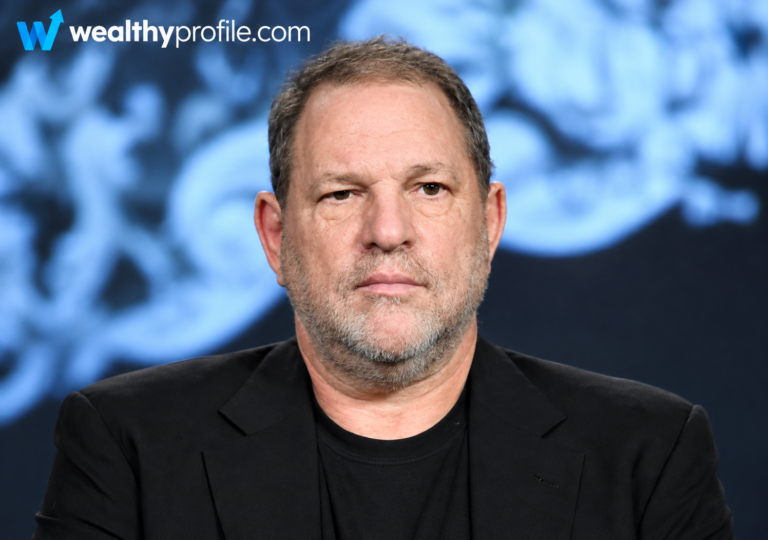
Harvey Weinstein net worth 2026 stands at approximately $25 million — a staggering collapse from the estimated $300 million fortune he commanded at the peak of his influence. The man who once controlled the Academy Awards conversation, produced films that grossed billions at the global box office, and built two of the most successful independent studios in cinema history now sits in a cell at Rikers Island, battling bone marrow cancer while his remaining wealth continues to bleed out through legal fees, settlements, and the financial wreckage of a life defined by predation.
The decline is not abstract. It is $275 million gone. Real estate portfolios liquidated at fire-sale prices. A company that bore his name sold for a fraction of its value in bankruptcy court. Two divorce settlements. Defense attorneys billing up to $100,000 per month each. Civil settlements exceeding $40 million. And a criminal legal saga that, heading into late 2026, is still not finished.
This article traces every documented dollar — from a working-class childhood in Queens to the founding of Miramax, the Disney acquisition, the creation of The Weinstein Company, the financial apex, and the catastrophic unraveling that began in October 2017 when decades of alleged sexual abuse became public. It is a complete accounting of how one of the largest personal fortunes in entertainment history was destroyed.
In this article14 sections
- 01Quick Overview
- 02Early Life and Education
- 03The Founding of Miramax
- 04The Disney Acquisition
- 05How He Built a $300 Million Fortune
- 06The Weinstein Company Era
- 07The Financial Collapse
- 08Criminal Convictions
- 09Health Crisis
- 10What Remains of a $300 Million Fortune
- 11The #MeToo Impact
- 12Harvey Weinstein Compared to Other Disgraced Hollywood Fortunes
- 13Family and Personal Life
- 14Frequently Asked Questions (FAQs)
Quick Overview
| Detail | Information |
|---|---|
| Full Name | Harvey Weinstein |
| Date of Birth | March 19, 1952 |
| Place of Birth | Flushing, Queens, New York |
| Current Age | 74 |
| Peak Net Worth | Approximately $300 million |
| Current Net Worth (2026) | Approximately $25 million |
| Primary Income Sources | Film production, executive salary, backend profit participation |
| Companies Founded | Miramax Films (1979), The Weinstein Company (2005) |
| Academy Award Record | 341 Oscar nominations, 81 wins (across produced/distributed films) |
| Marriages | Eve Chilton (1987–2004), Georgina Chapman (2007–2021) |
| Children | Five (three with Chilton, two with Chapman) |
| Criminal Convictions | Criminal sexual act (NY, 2025); rape and sexual misconduct (CA, 2022) |
| Current Status | Incarcerated at Rikers Island; awaiting sentencing |
| Health | Chronic myeloid leukemia, heart surgery (2024) |
Early Life and Education — Queens, Buffalo, and the Concert Business
Harvey Weinstein was born on March 19, 1952, in Flushing, Queens, New York. His father, Max Weinstein, was a diamond cutter. His mother, Miriam Postel Weinstein, was a homemaker. Both were of Jewish heritage — Miriam’s parents had emigrated from Poland. Harvey had one sibling, a younger brother named Bob.
The family lived in a housing project in Queens — a modest, working-class upbringing that shaped the aggressive, scrappy business instincts Weinstein would carry into every deal he ever made. He attended John Bowne High School in Flushing before enrolling at the State University of New York at Buffalo in 1969. He attended the university until 1973 but did not graduate.
While at Buffalo, Harvey and Bob, along with a friend named Corky Burger, formed Harvey & Corky Productions. The venture promoted rock concerts in the Buffalo area, booking major acts including Frank Sinatra, The Who, and The Rolling Stones. The concert promotion business generated enough profit to fund the brothers’ next and far more consequential venture.
The Founding of Miramax — A Studio Named for Mom and Dad (1979)
In 1979, Harvey and Bob Weinstein used profits from their concert business to found Miramax Films. The name was a tribute to their parents — a combination of “Miriam” and “Max.” It was a sentimental touch from a man who would become known for anything but sentimentality in business.
Miramax started small, distributing independent and foreign-language films that the major studios ignored. The company’s first significant release was The Secret Policeman’s Other Ball in 1982, a British concert film. But the real breakthrough came in 1989 with Steven Soderbergh’s Sex, Lies, and Videotape, which won the Palme d’Or at Cannes and grossed $36 million worldwide on a $1.2 million budget. That single film put Miramax on the map and established the template Weinstein would perfect over the next two decades: acquire low-budget films with awards potential, then campaign relentlessly for Oscar recognition.
Through the late 1980s and early 1990s, Miramax became the most powerful independent distributor in Hollywood. Films like My Left Foot (1989), The Crying Game (1992), and Reservoir Dogs (1992) proved that Weinstein had an extraordinary instinct for identifying commercial art-house cinema.
The Disney Acquisition — $80 Million and the Keys to Hollywood (1993)
In 1993, The Walt Disney Company acquired Miramax Films for approximately $80 million. The deal gave the Weinstein brothers access to Disney’s distribution infrastructure and financial backing while allowing them to maintain creative independence — a rare arrangement that made Miramax arguably the most powerful brand in independent film.
Under the Disney umbrella, Miramax entered its golden era. The studio produced or distributed a staggering run of commercially and critically successful films that reshaped the awards landscape:
Pulp Fiction (1994) grossed $213 million worldwide and revived John Travolta’s career. The English Patient (1996) won nine Academy Awards including Best Picture. Good Will Hunting (1997) launched Matt Damon and Ben Affleck to stardom. Shakespeare in Love (1998) won seven Oscars including Best Picture — a victory widely attributed to Weinstein’s aggressive, personally directed awards campaign that outmaneuvered Steven Spielberg’s Saving Private Ryan. Chicago (2002) grossed $306 million worldwide.
Miramax also distributed Peter Jackson’s The Lord of the Rings trilogy (2001–2003), which collectively grossed nearly $3 billion worldwide and won seventeen Academy Awards.
At the height of the Miramax era, films produced or distributed by the studio received 341 Academy Award nominations and won 81 Oscars. Weinstein was personally thanked in 34 Oscar acceptance speeches between 1966 and 2016 — second only to Steven Spielberg. He personally won the Academy Award for Best Picture as producer of Shakespeare in Love.
Harvey Weinstein Peak Net Worth — How He Built a $300 Million Fortune
Weinstein’s wealth came from multiple revenue streams, all flowing from his position at the center of the film industry:
Executive Salary: As co-chairman of both Miramax and later The Weinstein Company, Weinstein drew annual compensation packages that, combined with bonuses and perks, reached into the millions.
Producer Fees: Weinstein earned between $1.5 million and $2 million per film as a producer credit — and he attached his name to a large volume of productions annually.
Backend Profit Participation: This was the most lucrative stream. On major hits like Pulp Fiction, Shakespeare in Love, The King’s Speech, and Django Unchained, Weinstein held profit participation points that generated millions in ongoing revenue as films continued earning through theatrical, home video, television, and streaming windows.
Disney Sale Proceeds: The $80 million Miramax acquisition in 1993 provided the Weinstein brothers with a substantial cash infusion. While the exact split between Harvey and Bob was never publicly disclosed, each brother received tens of millions.
Equity in The Weinstein Company: Harvey and Bob collectively owned approximately 42% of TWC, with Harvey holding roughly 21%. At its pre-scandal peak, the company was valued at several hundred million dollars.
Broadway Productions: Weinstein produced multiple Tony Award-winning shows, including The Producers and Billy Elliot the Musical. He won seven Tony Awards total, and these theatrical ventures generated additional income through ticket sales and licensing.
At his financial peak — estimated between 2012 and 2016 — Harvey Weinstein’s net worth reached approximately $240 million to $300 million, depending on the valuation method applied to his illiquid assets, profit participation deals, and TWC equity.
The Weinstein Company Era — From Launch to Bankruptcy (2005–2018)
After departing Miramax in 2005 following a falling-out with Disney executives, Harvey and Bob Weinstein founded The Weinstein Company (TWC) on September 30, 2005. The new studio quickly established itself as a major player in both film and television.
Key TWC productions and distributions included Inglourious Basterds (2009), The King’s Speech (2010, which won four Oscars including Best Picture), The Artist (2011, Best Picture), Silver Linings Playbook (2012), Django Unchained (2012), The Imitation Game (2014), and Lion (2016). The company also expanded into television with the acclaimed series Project Runway.
But behind the awards campaigns and red-carpet premieres, TWC was never as financially stable as it appeared. The company operated with heavy debt, and its success was disproportionately dependent on the occasional mega-hit to offset the losses from films that underperformed. When the allegations against Harvey became public in October 2017, the company’s fragile financial foundation collapsed almost immediately.
On October 8, 2017, Weinstein was fired from his own company. On March 20, 2018, TWC filed for Chapter 11 bankruptcy. The company’s assets — including its film library, television properties, and intellectual property — were sold to Lantern Capital Partners in July 2018 for $289 million. Lantern rebranded the assets under a new entity called Lantern Entertainment (later folded into Spyglass Media Group).
The bankruptcy effectively eliminated Harvey Weinstein’s approximately 21% equity stake in TWC. Given the company’s debts, secured creditors, and legal obligations, the equity holders — including both Weinstein brothers — received nothing from the sale.
The Financial Collapse — Property Sales, Legal Fees, and Divorce
The speed and totality of Weinstein’s financial collapse between October 2017 and 2021 is remarkable even by the standards of public-figure downfalls.
Real Estate Liquidation — $62 Million in Forced Sales
Between late 2017 and 2019, Weinstein sold off his real estate portfolio in a series of transactions that totaled approximately $62 million:
| Property | Purchase Price | Sale Price | Year Sold |
|---|---|---|---|
| Westport, CT estate | Undisclosed | $16 million | 2018 |
| Amagansett, NY beach house | Undisclosed | $10 million | 2018 |
| NYC townhouse (purchased 2006) | $15 million | $25.6 million | March 2018 |
| Tribeca commercial condo | Undisclosed | $6.1 million | 2018 |
Additionally, in 2006 Weinstein had sold a Manhattan property to Robert De Niro for $20.9 million — proceeds that contributed to his pre-scandal asset base.
The property sales were not voluntary portfolio management. They were driven by the urgent need for cash to fund legal defense costs and to comply with the terms of his unraveling business and personal relationships.
Legal Fees — The $100,000-Per-Month Drain
Weinstein’s criminal defense costs have been staggering. With defense attorneys billing up to $100,000 per month each, and multiple attorneys required for simultaneous New York and California criminal proceedings, the cumulative legal expenditure over nearly nine years of litigation (2017–2026) is estimated in the tens of millions of dollars.
Beyond criminal defense, Weinstein faced civil litigation on multiple fronts. Class action settlements and civil payouts to accusers exceeded $40 million. Insurance policies covered a portion of some civil settlements, but Weinstein bore substantial personal costs for criminal defense — criminal proceedings are not covered by directors’ and officers’ insurance.
Divorce — Two Settlements Totaling Over $20 Million
Weinstein’s first marriage to Eve Chilton, a former assistant at Miramax, ended in 2004. The divorce settlement included child support for their three daughters. As of reporting in the late 2010s, Weinstein owed Chilton approximately $5 million in unpaid support obligations.
His second marriage to fashion designer Georgina Chapman — co-founder of the luxury fashion label Marchesa — ended more publicly and more expensively. Chapman announced she was leaving Weinstein on October 10, 2017, five days after the first New York Times exposé. Their divorce was finalized in July 2021, with Chapman receiving a settlement estimated between $15 million and $20 million, plus full custody of their two children (a daughter born in 2010 and a son born in 2013).
Combined, the two divorces cost Weinstein over $20 million in settlements and ongoing support obligations — money drawn from an asset base that was simultaneously being drained by legal fees and the loss of all income-generating business activity.
Criminal Convictions — New York and California
Harvey Weinstein’s criminal legal history is a complex, multi-jurisdictional saga that has spanned nearly a decade and, as of mid-2026, is still producing new developments.
The New York Case (2018–2026)
On May 25, 2018, Weinstein was arrested in Manhattan and charged with multiple sex crimes. His initial trial began in January 2020, and on February 24, 2020, a jury convicted him of one count of criminal sexual assault in the first degree (against production assistant Mimi Haley) and one count of rape in the third degree (against aspiring actress Jessica Mann). He was acquitted of the two most serious charges — predatory sexual assault — which could have carried a life sentence.
On March 11, 2020, Weinstein was sentenced to 23 years in prison.
On April 25, 2024, the New York Court of Appeals overturned the conviction in a 4-3 decision, ruling that the trial judge had committed “egregious errors” by allowing testimony from women whose allegations were not part of the criminal charges.
Weinstein’s retrial began on April 15, 2025. On June 11, 2025, the jury delivered a split verdict: convicted on one count of criminal sexual act (involving Mimi Haley), acquitted on one count involving Kaja Sokola, and a hung jury on a rape charge involving Jessica Mann. On June 12, 2025, the judge declared a mistrial on the Mann rape charge. A mistrial was also declared on May 15, 2026, regarding a separate charge.
On June 25, 2026, the Manhattan District Attorney’s office declined to pursue a fourth trial, effectively concluding the New York proceedings. Weinstein awaits sentencing on the criminal sexual act conviction, scheduled for September 2026.
The California Case (2021–2026)
On July 20, 2021, Weinstein was extradited to California to face additional charges. His trial commenced in October 2022. On December 19, 2022, a jury convicted him on three of seven charges: rape, forced oral copulation, and sexual misconduct involving two women.
On February 23, 2023, he was sentenced to 16 years in prison, to be served consecutively after his New York sentence.
In June 2026, a California appeals court upheld the conviction but set aside the 16-year sentence for resentencing, citing procedural impacts from the overturned New York conviction. Weinstein awaits resentencing in California as well.
Total Potential Prison Time
As of mid-2026, Weinstein faces sentencing in two jurisdictions. The New York criminal sexual act conviction carries a potential sentence of up to 25 years. The California conviction, pending resentencing, originally carried 16 years. Combined, Weinstein could spend decades in prison — though his deteriorating health has raised questions about whether he will survive the duration of any lengthy sentence.
Health Crisis — Leukemia, Heart Surgery, and Deterioration
Weinstein’s health has deteriorated dramatically during his years of incarceration:
In 1999, long before his legal troubles, Weinstein underwent surgery for Fournier gangrene — a rare and life-threatening bacterial infection.
In July 2024, he was hospitalized at Bellevue Hospital with COVID-19 and double pneumonia.
On September 9, 2024, Weinstein was transferred from Rikers Island to a hospital for emergency heart surgery.
In October 2024, he was diagnosed with chronic myeloid leukemia — a form of bone marrow cancer. His attorneys publicly disclosed the diagnosis.
On December 2, 2024, Weinstein was again hospitalized after “alarming” blood test results, raising concerns about the progression of his cancer.
Throughout his 2025 retrial, Weinstein appeared in court in visibly diminished physical condition. His defense team has repeatedly cited his health as a factor that should be considered in sentencing. As of mid-2026, he remains incarcerated at Rikers Island while managing multiple serious medical conditions.
Harvey Weinstein Net Worth 2026 — What Remains of a $300 Million Fortune
Financial analyst Jack Cohen estimated Weinstein’s current net worth at approximately $25 million, noting: “Between the legal fees, divorce settlements, and child support… his net worth has declined dramatically from its peak.”
Here is a reconstruction of the wealth trajectory:
| Year | Estimated Net Worth | Key Event |
|---|---|---|
| 1993 | $30–50 million | Disney acquires Miramax for $80M |
| 2000 | $100–150 million | Miramax at peak under Disney |
| 2012–2016 | $240–300 million | TWC producing Oscar winners; peak earning years |
| October 2017 | $200–250 million | Allegations become public; fired from TWC |
| 2018 | $150–175 million | TWC bankruptcy; property sales; arrest |
| 2020 | $75–100 million | 23-year sentence; ongoing legal costs |
| 2023 | $35–50 million | California conviction; continued legal drain |
| 2026 | ~$25 million | Retrial costs; cancer treatment; no income |
The remaining $25 million likely consists of whatever liquid assets, investment accounts, and residual income streams (such as backend participation on films still generating revenue through streaming) Weinstein has managed to retain. However, ongoing legal fees, medical costs, child support obligations, and potential future civil claims continue to erode even this diminished figure.
The #MeToo Impact — How One Scandal Reshaped an Industry
The public exposure of Weinstein’s decades of alleged sexual abuse in October 2017 — first by the New York Times and then by The New Yorker — triggered the global #MeToo movement. The consequences extended far beyond one man’s financial ruin:
The Academy of Motion Picture Arts and Sciences expelled Weinstein on October 14, 2017, just nine days after the first story published. He was only the second person ever expelled from the organization.
The University at Buffalo revoked his honorary doctorate in 2017. France revoked his Légion d’honneur. The United Kingdom revoked his honorary CBE in September 2020.
The scandal triggered investigations into sexual misconduct across entertainment, media, politics, business, and other industries. Hundreds of public figures faced accusations, investigations, and consequences in the years that followed.
For Weinstein personally, the reputational collapse was total. A man who had been courted by presidents, praised by the world’s most famous actors, and feared by studio executives found himself universally condemned. Over 100 women eventually came forward with allegations of sexual harassment, assault, or rape.
Harvey Weinstein Compared to Other Disgraced Hollywood Fortunes
| Individual | Peak Net Worth | Current Net Worth | Primary Cause of Decline |
|---|---|---|---|
| Harvey Weinstein | $300 million | $25 million | Criminal convictions, legal fees, TWC bankruptcy |
| Bill Cosby | $400 million | $400 million | Conviction overturned; retained most assets |
| Kevin Spacey | $100 million | $30 million | Criminal charges (acquitted); career loss |
| R. Kelly | $100 million | -$2 million | Racketeering, sex trafficking convictions |
| Danny Masterson | $16 million | ~$8 million | Rape conviction, civil suits |
| Phil Spector | $50 million (at death) | Estate ~$50 million | Murder conviction (2009) |
What distinguishes Weinstein’s financial collapse from other high-profile cases is the speed and comprehensiveness of the destruction. Bill Cosby retained most of his wealth despite criminal proceedings. Kevin Spacey was acquitted and kept a significant portion of his assets. Weinstein lost his company, his properties, his income streams, and his freedom simultaneously — a financial demolition unmatched by any comparable case in entertainment history.
Family and Personal Life
Harvey Weinstein married his first wife, Eve Chilton, in 1987. Chilton was a former assistant at Miramax. They had three daughters together: Remy (born 1995), Emma (born 1998), and Ruth (born 2002). The marriage ended in divorce in 2004.
In 2007, Weinstein married Georgina Chapman, the British fashion designer who co-founded the luxury label Marchesa with Keren Craig in 2004. They had two children together: a daughter, India Pearl (born 2010), and a son, Dashiell Max Robert (born 2013). Chapman announced her departure from Weinstein on October 10, 2017, five days after the initial New York Times report. Their divorce was finalized in July 2021.
Weinstein’s brother Bob remains active in the entertainment industry but has largely distanced himself from Harvey since the scandal. Their parents — Max, who died in 1976, and Miriam, who died in 2016 — did not live to see the full extent of their son’s downfall.
Frequently Asked Questions (FAQs)
What is Harvey Weinstein’s net worth in 2026?
Harvey Weinstein’s net worth in 2026 is estimated at approximately $25 million, according to Celebrity Net Worth and financial analysts. This represents a decline of roughly $275 million from his peak fortune of approximately $300 million during the height of his Hollywood career.
How much was Harvey Weinstein worth before the scandal?
At his peak between 2012 and 2016, Harvey Weinstein’s net worth was estimated between $240 million and $300 million. This included equity in The Weinstein Company, a real estate portfolio worth over $60 million, backend profit participation on major films, and ongoing producer fees.
How did Harvey Weinstein make his money?
Weinstein built his fortune through film production at Miramax Films (founded 1979, sold to Disney for $80 million in 1993) and The Weinstein Company (founded 2005). His income came from executive salaries, producer fees of $1.5–$2 million per film, backend profit participation on hit movies like Pulp Fiction and Django Unchained, and Broadway productions that won seven Tony Awards.
What happened to The Weinstein Company?
After Harvey was fired on October 8, 2017, The Weinstein Company filed for Chapter 11 bankruptcy on March 20, 2018. Its assets — including the film library, television properties, and intellectual property — were sold to Lantern Capital Partners for $289 million in July 2018. Both Weinstein brothers’ equity stakes were effectively wiped out.
How much did Harvey Weinstein pay in legal fees?
Weinstein’s defense attorneys billed up to $100,000 per month each, and he required multiple attorneys for simultaneous proceedings in New York and California. Over nearly nine years of litigation (2017–2026), cumulative legal costs are estimated in the tens of millions. Civil settlements and class action payouts exceeded an additional $40 million.
How much did Georgina Chapman receive in the divorce?
Georgina Chapman received an estimated $15 million to $20 million in the divorce settlement finalized in July 2021, plus full custody of their two children. Weinstein’s first wife, Eve Chilton, also received a divorce settlement, and Weinstein reportedly owed her approximately $5 million in unpaid support as of the late 2010s.
Is Harvey Weinstein still in prison in 2026?
Yes. As of mid-2026, Weinstein is incarcerated at Rikers Island in New York. He was convicted in his New York retrial in June 2025 on one count of criminal sexual act and awaits sentencing scheduled for September 2026. His California conviction for rape and sexual misconduct was upheld in June 2026, though his 16-year sentence was set aside for resentencing.
What is Harvey Weinstein’s health status?
Weinstein’s health has deteriorated significantly. He underwent emergency heart surgery in September 2024 and was diagnosed with chronic myeloid leukemia (bone marrow cancer) in October 2024. He was hospitalized again in December 2024 after alarming blood test results. He appeared in visibly diminished condition throughout his 2025 retrial.
How many films did Harvey Weinstein produce?
Films produced or distributed by Weinstein’s companies — Miramax and The Weinstein Company — received 341 Academy Award nominations and won 81 Oscars. Major productions included Pulp Fiction, Good Will Hunting, Shakespeare in Love, Chicago, The Lord of the Rings trilogy, The King’s Speech, Django Unchained, and The Imitation Game.
What properties did Harvey Weinstein sell?
Between 2017 and 2019, Weinstein sold properties totaling approximately $62 million, including a Westport, Connecticut estate ($16M), an Amagansett beach house ($10M), a NYC townhouse ($25.6M), and a Tribeca commercial condo ($6.1M). These forced sales were driven by the need to fund legal defense costs.
Was Harvey Weinstein’s New York conviction overturned?
His original 2020 New York conviction was overturned on April 25, 2024, by the New York Court of Appeals in a 4-3 decision citing trial errors. However, he was retried in 2025 and convicted again on one count of criminal sexual act in June 2025. The Manhattan DA declined a fourth trial in June 2026. He awaits sentencing on the surviving conviction.
How many women accused Harvey Weinstein?
Over 100 women have publicly accused Weinstein of sexual harassment, assault, or rape. He was criminally convicted of offenses involving four accusers across his New York and California trials. The allegations span decades, with reported incidents from the 1970s through 2017.
You must read our other blogs :
Jeffrey Epstein Net Worth 2026 — The Shocking $578M Fortune, Where It Came From, and What Remains
Robert Redford Net Worth 2026 — The Staggering Fortune Behind the Sundance King