In this article7 sections
Who Is Gene Bicknell?
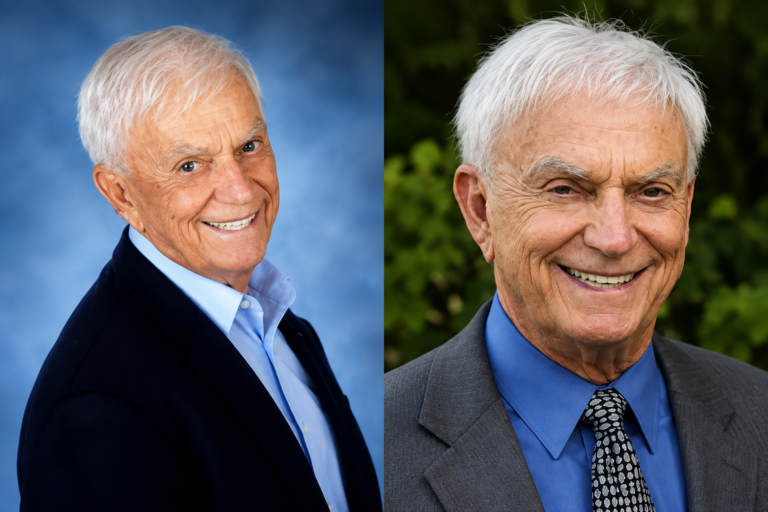
Gene O. Bicknell was born in 1931 in Picher, Oklahoma, a small mining town in the northeastern corner of the state. He was one of five children in his family. His early life didn’t hint at the business empire he’d eventually build — Picher was a working-class lead and zinc mining community, not exactly a launchpad for future entrepreneurs.
Bicknell’s family later moved to Pittsburg, Kansas, where he attended Pittsburg State University, earning both a bachelor’s degree and, later, an MBA. That connection to Pittsburg State would go on to define much of his public life outside of business — he’s remained one of the university’s most prominent benefactors for decades, funding scholarships and academic programs that still carry his name and influence today.
Professionally, Bicknell is best known as the founder and longtime owner of NPC International, which grew into the largest Pizza Hut franchise operator in the United States. But his interests extended well past fast food. He’s also been described as a painter, author, singer, and musician, and he’s been vocal on his personal social media accounts about politics, faith, and current events. In the 1980s, he stepped into politics directly, running for Governor of Kansas as a Republican in both 1986 and 1990. Neither campaign was successful, but both cemented him as a recognizable name in Kansas business and political circles well beyond the restaurant industry.
So, What Is Gene Bicknell’s Net Worth?
Here’s the most honest answer available: there is no publicly verified net worth figure for Gene Bicknell. He has never appeared on Forbes’ real-time billionaires index or any comparable tracked-wealth list. Those indexes typically rely on publicly traded stock holdings, SEC filings, or other disclosed financial data to calculate a defensible number — and Bicknell simply doesn’t have that kind of public financial footprint. NPC International was privately held for its entire existence, which means the actual terms of its eventual sale, and Bicknell’s personal share of the proceeds, were never made public.
That hasn’t stopped a small industry of “celebrity net worth” websites from publishing numbers anyway. A quick survey of what’s out there turns up wildly inconsistent estimates: some place his net worth in the hundreds of thousands of dollars, others in the hundreds of millions, and at least one outlier claims a figure in the billions with no explanation at all for how that number was reached. Almost none of these sites cite a primary source — no SEC filing, no court document, no interview where Bicknell discusses his finances directly. They’re estimates built on other estimates, recycled across dozens of low-effort content sites that all seem to be quoting each other rather than any original reporting.
Rather than add one more unverified guess to that pile, it’s more useful to look at what actually is on the record — starting with the one financial figure connected to Bicknell that’s backed by an actual court ruling.
The NPC International Sale
In 2006, Bicknell sold his ownership stake in NPC International to Merrill Lynch Global Private Equity. At the time of the sale, NPC was the largest Pizza Hut franchisee in the world, operating close to 800 restaurants across more than two dozen states. Building a franchise network of that size from the ground up, over multiple decades, is itself a strong signal of substantial business success — even without an exact dollar figure attached to the eventual sale.
What we don’t have is a disclosed sale price. Private equity acquisitions of privately held companies rarely come with public price tags, and NPC International’s sale was no exception. Any net worth estimate that claims to know exactly how much Bicknell personally received from that transaction is, by definition, speculating.
The 16-Year Kansas Tax Fight
If there’s one number connected to Gene Bicknell that’s actually verifiable, it’s this one: $63 million.
That’s the amount the Kansas Supreme Court ordered the state to refund Bicknell in May 2022, following one of the longest and highest-stakes residency tax disputes in Kansas legal history. The case centered on a deceptively simple question: where did Gene Bicknell actually live in 2005 and 2006, when he sold NPC International?
Bicknell said he’d relocated to Florida in 2003, well before the sale closed, making him a Florida resident — and therefore not subject to Kansas income tax on the proceeds. The Kansas Department of Revenue disagreed, arguing he was still domiciled in Kansas at the time of the sale, and issued an initial tax assessment of roughly $42.5 million. With interest and penalties accumulating over the years the case dragged on, that number eventually grew past $60 million.
The legal fight that followed stretched on for roughly 16 years, working its way through multiple courts with a genuinely tangled procedural history. A district court initially sided with Bicknell in 2019. The Kansas Court of Appeals reversed that decision in 2021. Finally, in May 2022, the Kansas Supreme Court weighed in and sided decisively with Bicknell, ruling that he had, in fact, established a bona fide Florida domicile before the NPC sale closed — despite the added complexity that his wife had continued to claim Kansas residency during part of that same period. The court found that didn’t matter for Bicknell’s own case, since he’d met the burden of proving his own change of domicile independently.
The result: Kansas was ordered to return more than $63 million — the original disputed tax amount plus accumulated interest and penalties — to Bicknell. For context on the scale of that ruling, Kansas collected roughly $4.6 billion in total individual income tax in 2021, meaning this single refund represented close to 1% of an entire year’s statewide income tax revenue, paid out to one person.
This case is, by a wide margin, the single most concrete, court-documented financial figure connected to Gene Bicknell’s name. It’s not his net worth — it’s a tax refund tied to one transaction from nearly two decades ago — but it’s real, it’s sourced, and it’s the closest thing to hard financial data that exists in the public record.
Where His Wealth Likely Comes From
Even without a confirmed total net worth, Bicknell’s financial profile points to a few clear and well-documented sources of wealth:
- NPC International. Decades spent building and expanding the largest Pizza Hut franchise network in the United States, culminating in its 2006 sale, remains the core of his business legacy and almost certainly the foundation of his personal wealth.
- Banking and real estate. Reporting connects Bicknell to additional financial interests, including ties to Capital Federal Savings Bank, suggesting his wealth has been diversified beyond restaurant franchising over the years.
- Long-term philanthropy. Bicknell has been a major, consistent donor to Pittsburg State University for decades, funding scholarships and academic initiatives. Sustained giving at that level over a long period typically signals significant disposable wealth, even in the absence of a public net-worth figure.
- Creative and media ventures. Bicknell has described himself as an author, painter, and musician, with books, music, and other projects promoted through his personal platforms — a smaller but notable slice of his broader public profile.
Why You Should Be Skeptical of Any Specific Number You See Online
It’s worth pausing on why this particular topic generates so much bad information. “Net worth” content is one of the most heavily farmed categories on the internet — thousands of low-effort sites publish net worth “estimates” for public figures with little to no original research, often just rewording each other’s guesses to rank in search results. For a figure like Bicknell, who isn’t a Fortune 500 CEO with disclosed stock holdings and isn’t tracked by financial media the way tech billionaires are, this problem gets worse. There’s simply no reliable public data source for these sites to draw from, so they invent one — and then the next site copies that invented number, and the one after that copies both.
That’s exactly what appears to have happened here. The range of figures attached to Bicknell’s name — from under a million dollars to hundreds of millions to, implausibly, the billions — isn’t evidence of genuine disagreement among careful researchers. It’s evidence that nobody has real data, and everyone is guessing anyway.
Frequently Asked Questions
How did Gene Bicknell make his money?
Primarily through NPC International, the company he built into the largest Pizza Hut franchise operator in the United States before selling it to Merrill Lynch Global Private Equity in 2006.
What was the Kansas tax case about?
Kansas argued Bicknell was a state resident when he sold NPC International in 2006 and taxed the transaction accordingly. Bicknell argued he had already established Florida residency by then. After a 16-year legal battle, the Kansas Supreme Court sided with him in 2022, ordering a refund of more than $63 million.
Does Gene Bicknell still own Pizza Hut restaurants?
No. He sold NPC International, including its nearly 800 Pizza Hut locations, to Merrill Lynch Global Private Equity in 2006.
Is Gene Bicknell a billionaire?
There’s no public evidence supporting that claim. He doesn’t appear on any tracked wealth index, and billionaire-range estimates circulating online cite no verifiable source.
How old is Gene Bicknell?
Born in 1931, he would be roughly 94 or 95 years old as of 2026.
Did Gene Bicknell run for political office?
Yes. He ran for Governor of Kansas as a Republican in both 1986 and 1990, losing both races.
Where did Gene Bicknell grow up?
He was born in Picher, Oklahoma, and later moved to Pittsburg, Kansas, where he attended Pittsburg State University.
Why can’t anyone confirm his exact net worth?
NPC International was privately held throughout its existence, so the terms of its sale and Bicknell’s personal proceeds were never publicly disclosed. Without that underlying data, any specific dollar figure attached to his name online is an estimate, not a sourced fact.
What is Bicknell’s connection to Pittsburg State University?
He’s a longtime major donor to the school, where he earned both his bachelor’s degree and MBA. His giving has supported scholarships and academic programs over several decades.
How much did Kansas ultimately have to pay Bicknell?
More than $63 million, combining the original disputed tax assessment with accumulated interest and penalties from the 16-year dispute.
You must read our previous blogs :
Mark Estes Net Worth 2026: His Real Earnings Revealed
Shannon Beador Net Worth 2026: How She Rebuilt a $20 Million Empire