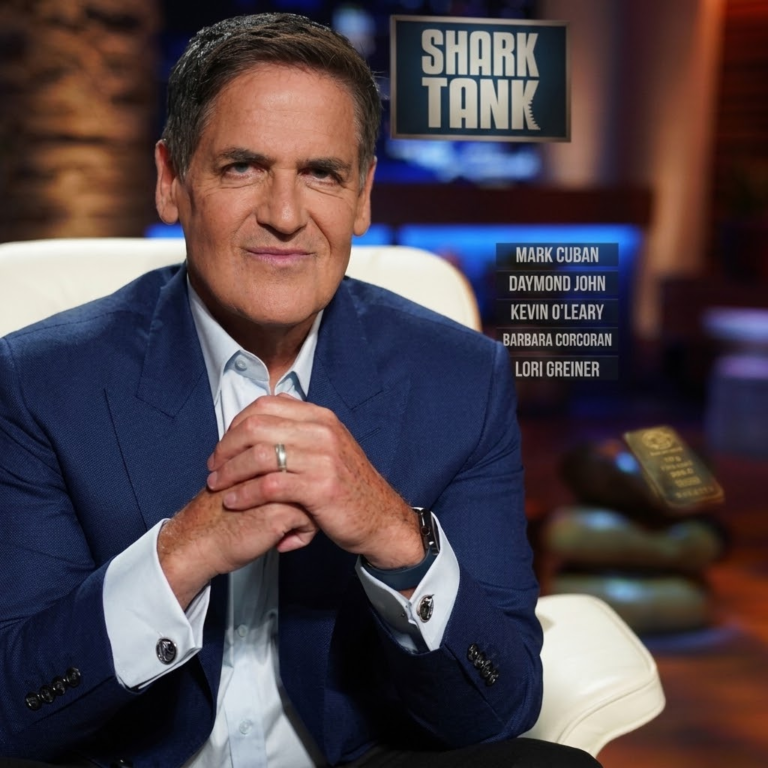
Mark Cuban net worth 2026 is estimated at $6 billion according to the Forbes Real-Time Billionaires Index — placing him at #678 among the world’s wealthiest people and cementing his status as one of America’s most recognizable self-made billionaires.
But the number alone does not capture what makes Cuban’s fortune so unusual. Unlike tech founders who cashed out once and coasted, Cuban has reinvented his wealth engine three separate times — first through a dot-com era sale that netted him billions, then through two decades of NBA ownership that multiplied his investment more than tenfold, and now through a low-margin pharmacy business that is quietly reshaping how Americans buy medicine.
He sold garbage bags door-to-door as a kid in Pittsburgh. He tended bar during college. He got fired from his first real job for closing a deal instead of opening the store. And he turned every setback into fuel for the next venture.
This article breaks down every piece of Mark Cuban’s $6 billion fortune — from the Broadcast.com windfall to the Shark Tank returns, from the Mavericks sale he regrets to the Cost Plus Drugs partnership with the federal government.
In this article13 sections
- 01Quick Facts
- 02Who Is Mark Cuban? From Garbage Bags to Billionaire
- 03Full Wealth Breakdown
- 04The Dallas Mavericks
- 05Cost Plus Drugs
- 06Shark Tank
- 07Mark Cuban’s Other Businesses and Investments
- 08How Mark Cuban Built His Fortune
- 09Mark Cuban’s Real Estate and Luxury Assets
- 10Controversies and Notable Moments
- 11How Mark Cuban’s Net Worth Compares to Other Billionaires
- 12What Could Change Mark Cuban’s Net Worth Next
- 13Frequently Asked Questions About Mark Cuban’s Net Worth
Mark Cuban Net Worth 2026: Quick Facts
| Detail | Information |
|---|---|
| Full Name | Mark Cuban |
| Date of Birth | July 31, 1958 |
| Age (2026) | 68 years old |
| Birthplace | Pittsburgh, Pennsylvania, USA |
| Residence | Dallas, Texas |
| Education | BS in Management, Indiana University (1981) |
| Net Worth (Forbes, Aug 2026) | $6 billion |
| Forbes Billionaire Rank | #678 (real-time), #694 (2026 list) |
| Forbes Self-Made Score | 8 out of 10 |
| Primary Wealth Source | Broadcast.com sale, investments |
| Spouse | Tiffany Stewart (married 2002) |
| Children | 3 |
| Key Businesses | Cost Plus Drugs, AXS TV, Mark Cuban Companies |
| Notable Former Asset | Dallas Mavericks (majority sold 2023) |
Who Is Mark Cuban? From Garbage Bags to Billionaire
Mark Cuban was not born into money. He grew up in a working-class family in Pittsburgh, Pennsylvania — the son of an automobile upholsterer. His mother was a homemaker. There was no trust fund, no family business to inherit, no safety net.
What Cuban did have was a stubborn refusal to stay broke.
At 12, he sold garbage bags door-to-door to earn enough for a pair of basketball shoes. In high school, he skipped his senior year entirely by enrolling early at the University of Pittsburgh before transferring to Indiana University’s Kelley School of Business, where he graduated in 1981 with a degree in management. During college, he ran a bar called Motley’s, taught disco lessons, and organized chain letter schemes — anything to make a buck.
After graduation, Cuban moved to Dallas and took a job as a bartender, then as a salesperson at a software company called Your Business Software. He was fired after he closed a $15,000 deal instead of opening the store one morning. That firing turned out to be the best thing that ever happened to him.
MicroSolutions: The First Million
In 1983, Cuban started MicroSolutions, a systems integration company that helped businesses navigate the early personal computer revolution. He taught himself software, networking, and sales simultaneously — often reading manuals late into the night and applying what he learned the next morning.
By 1990, MicroSolutions had grown large enough to attract CompuServe’s attention. Cuban sold the company for $6 million, netting approximately $2 million after taxes. He was 32 years old and officially a millionaire.
Broadcast.com: The Billion-Dollar Bet
The real fortune came next. In 1995, Cuban and his Indiana University friend Todd Wagner co-founded AudioNet — a company that streamed live radio broadcasts over the internet. They renamed it Broadcast.com and took it public in 1998.
By the time the dot-com boom hit its peak, Broadcast.com had 330 employees and $13.5 million in quarterly revenue. In April 1999, Yahoo acquired the company for $5.7 billion in stock. Cuban, who held the largest individual stake, walked away with an estimated $1.4 billion.
The move that separated Cuban from dozens of other dot-com millionaires who lost everything in the crash? He hedged. Cuban used financial instruments to protect the value of his Yahoo stock, locking in his gains even as Yahoo’s share price eventually cratered. That single decision preserved his fortune while others evaporated.
Mark Cuban Net Worth 2026: Full Wealth Breakdown
Estimating Cuban’s exact wealth involves some uncertainty because a significant portion sits in private companies without public valuations. Forbes pegs the number at $6 billion. Other estimates range from $6.2 billion to $6.8 billion depending on how aggressively private holdings are valued.
Here is the most detailed breakdown available:
| Wealth Source | Estimated Contribution | Type |
|---|---|---|
| Startup & Venture Investments | 30–35% (~$1.8–$2.1B) | Private equity, 400+ companies |
| Broadcast.com Sale Legacy | 20–25% (~$1.2–$1.5B) | Reinvested proceeds |
| Stock & Public Equity Holdings | 15–20% (~$900M–$1.2B) | Public markets |
| Cost Plus Drugs | 10–15% (~$600M–$900M) | Private (healthcare) |
| Dallas Mavericks Sale (2023) | 10–15% (~$600M–$900M) | Cash + retained 27% stake |
| Media & Shark Tank | 5–8% (~$300M–$480M) | TV, AXS TV, entertainment |
| Real Estate & Luxury Assets | 2–3% (~$120M–$180M) | Property, jets |
Note: Percentages are approximate and based on aggregated reporting from Forbes, InvestorMint, and UN Networth. Private company valuations are estimates.
The Dallas Mavericks: A $285M Bet That Returned $3.5 Billion
In January 2000, Cuban bought the Dallas Mavericks from H. Ross Perot Jr. for $285 million. At the time, the Mavericks were one of the worst franchises in the NBA — a perennial laughingstock with empty seats and a losing culture.
Cuban changed everything. He upgraded the team’s facilities, invested in player comfort (including that custom Boeing 757 with a weight room and extra-tall seating), sat courtside at every game, and racked up $2 million in NBA fines for his sideline antics. Fans loved it. Players wanted to come to Dallas.
The results followed. Under Cuban’s ownership, the Mavericks made the playoffs 17 times and won the NBA Finals in 2011, beating LeBron James and the Miami Heat. The franchise’s value skyrocketed.
In November 2023, Cuban sold his 73% majority stake to the family of casino magnate Miriam Adelson and Patrick Dumont for approximately $3.5 billion. He retained a 27% minority stake and operational oversight.
That means Cuban turned a $285 million purchase into a $3.5 billion exit — a return of roughly 1,128% over 23 years. By March 2026, Cuban publicly said he regrets the decision, telling reporters he misses the day-to-day involvement with the team.
Cost Plus Drugs: The Pharmacy That Could Change American Healthcare
Of all Cuban’s ventures, Cost Plus Drugs may end up being his most consequential.
Launched in January 2022, the Mark Cuban Cost Plus Drug Company operates on a radically transparent model: it buys generic medications directly from manufacturers, adds a flat 15% markup plus a small labor and shipping fee, and sells them to patients online. No insurance middlemen. No opaque pharmacy benefit managers. No hidden markups.
The savings are staggering. The average retail prescription costs $147. Cost Plus typically shaves off $130 from that number. Over 1,000 generic medications and select brand-name drugs are available on the platform, and patients routinely save 70% or more.
In May 2026, Cost Plus Drugs partnered with TrumpRx, a government-run platform offering Americans discounted brand-name medications purchased directly from manufacturers. Cost Plus shares its pricing API with the federal program, enabling cross-platform price comparisons and giving the government access to Cost Plus’s existing drug inventory. As Cuban put it: “As our volumes go up, our costs go down. And when our costs go down, the price for patients goes down.”
The company’s valuation remains undisclosed, but its rapid growth and federal partnership position it as one of the most promising healthcare disruptors in the United States. For Cuban, it represents something beyond wealth — a chance to take on America’s drug pricing crisis at a structural level.
Shark Tank: $33 Million In, $285 Million Out
Cuban joined Shark Tank in Season 3 (2011) and became the show’s most prolific investor before the final episode aired on May 16, 2025.
Over 15 seasons, he invested approximately $33 million of real capital across 246 deals. On air, his verbal commitments totaled roughly $54.9 million — but many deals are restructured or abandoned after filming, which is standard practice on the show.
The returns have been remarkable. Cuban’s cash-back returns hit roughly $35 million (a modest 6% on the original investment). But the market value of his retained equity stakes in hundreds of companies pushes the total portfolio value to an estimated $250 million — bringing his combined return to approximately $285 million, or a 763% total gain.
That works out to roughly 17% annually since 2011, significantly outperforming the S&P 500 over the same period. Not a single one of his 246 Shark Tank picks has gone public, which means the actual value could be higher if any of those companies eventually IPO or sell.
Cuban earned between $30,000 and $32,488 per episode in 2014–2016. His later-season rate was likely higher, though exact figures haven’t been disclosed.
Mark Cuban’s Other Businesses and Investments
Beyond the headline ventures, Cuban runs a sprawling portfolio through Mark Cuban Companies, his Dallas-based venture firm. He has invested in over 400 startups across technology, healthcare, artificial intelligence, fintech, and digital media.
AXS TV
Cuban is chairman of AXS TV, an independent cable and satellite television network focused on live music, combat sports, and entertainment programming. He co-founded the network with Ryan Seacrest and talent manager Irving Azoff.
2929 Entertainment
Co-founded with longtime partner Todd Wagner, 2929 Entertainment is a film and media production company. Its subsidiary, Magnolia Pictures, distributes independent films. The company helped pioneer the simultaneous release of films in theaters, on DVD, and on pay-per-view — a model that was considered radical at the time but is now standard across the industry.
Investment Focus Areas
Cuban’s recent investment activity concentrates on several sectors: AI and machine learning startups, healthcare technology beyond Cost Plus, fintech and digital payment platforms, SaaS companies, and consumer products emerging from his Shark Tank pipeline.
How Mark Cuban Built His Fortune: A Timeline
| Year | Milestone |
|---|---|
| 1958 | Born July 31 in Pittsburgh, Pennsylvania |
| 1970 | Age 12: sells garbage bags door-to-door to buy basketball shoes |
| 1981 | Graduates from Indiana University with BS in Management |
| 1982 | Moves to Dallas; works as bartender, then software salesperson (gets fired) |
| 1983 | Founds MicroSolutions, a systems integration startup |
| 1990 | Sells MicroSolutions to CompuServe for $6 million; becomes a millionaire at 32 |
| 1995 | Co-founds AudioNet (later Broadcast.com) with Todd Wagner |
| 1998 | Broadcast.com IPOs; listed on NASDAQ |
| 1999 | Yahoo acquires Broadcast.com for $5.7 billion; Cuban becomes a billionaire at 40 |
| 1999 | Buys Gulfstream G550 online for $40 million (Guinness World Record for largest e-commerce purchase) |
| 2000 | Purchases Dallas Mavericks for $285 million |
| 2003 | Co-founds 2929 Entertainment with Todd Wagner |
| 2011 | Joins Shark Tank Season 3 as lead investor; Mavericks win NBA Finals |
| 2022 | Launches Mark Cuban Cost Plus Drug Company |
| 2023 | Sells 73% Mavericks stake to Adelson family for ~$3.5 billion; retains 27% |
| 2025 | Final Shark Tank episode airs (May 16); 246 deals, $33M invested, $285M portfolio value |
| 2026 | Forbes lists at $6 billion; Cost Plus Drugs partners with TrumpRx; ranked #678 globally |
Mark Cuban’s Real Estate and Luxury Assets
Cuban has spread significant wealth across luxury real estate and high-end transportation.
Real Estate Portfolio (~$55 Million+)
- Dallas mansion (Preston Hollow): 23,676 square feet on roughly 7 acres. French chateau-style with 10 bedrooms, up to 16 bathrooms, an indoor basketball court, lagoon-style pool, and a detached three-story guest house. Valued at $19–$22 million. Owned since 1999.
- Laguna Beach, California: Approximately 8,000-square-foot contemporary oceanfront home at the Montage Residences. Purchased in 2018 for $19 million. Features floor-to-ceiling glass walls and ocean-facing terraces.
- New York City: Multiple units in Trump International Hotel and Tower valued at approximately $13.5 million combined. Cuban has reportedly expressed interest in selling.
- Mustang, Texas: An entire 77-acre town purchased for approximately $2 million to help a friend’s family.
Private Aviation
Cuban owns two aircraft:
- Gulfstream G550: Purchased online in 1999 for $40 million — a transaction that earned a Guinness World Record as the largest single e-commerce purchase at the time. Seats up to 19 passengers with private sleeping quarters and bathroom.
- Boeing 757-200: Acquired around 2000 for $36 million. Custom-configured to transport the Dallas Mavericks, featuring a weight room, medical treatment areas, and extra-tall seating for 7-foot players. Flies roughly 600 hours annually and charters to other groups during the NBA off-season.
Controversies and Notable Moments
Cuban’s career has not been without friction. A few notable episodes stand out.
$2 Million in NBA Fines. During his 23 years as Mavericks owner, Cuban racked up approximately $2 million in fines from the NBA for his courtside outbursts, public criticism of referees, and general disregard for the league’s decorum rules. He treated the fines as a cost of doing business — and the publicity they generated was arguably worth more than the penalty.
SEC Insider Trading Lawsuit (2013). The SEC sued Cuban in 2008 for alleged insider trading related to a stock sale in Mamma.com (now Copernic). Cuban fought the case aggressively and was acquitted by a jury in 2013, calling it “one of the best days of my life.”
Mavericks Workplace Investigation (2018). An investigation by Sports Illustrated revealed a pattern of workplace misconduct within the Mavericks organization. Cuban was not personally accused but faced criticism for what happened on his watch. He cooperated with the NBA’s investigation, and the league required organizational reforms.
Mavericks Sale Regret. By March 2026, Cuban publicly said he regrets selling the majority stake. The emotional weight of walking away from a franchise he transformed over two decades appears to have caught up with him — a rare moment of vulnerability from one of business’s most confident personalities.
How Mark Cuban’s Net Worth Compares to Other Billionaires
| Name | Net Worth (2026) | Primary Source | Self-Made? |
|---|---|---|---|
| Elon Musk | $839B | Tesla, SpaceX | Yes |
| Jeff Bezos | $230B+ | Amazon | Yes |
| Mark Zuckerberg | $200B+ | Meta | Yes |
| Mark Cuban | $6B | Broadcast.com, Investments | Yes |
| Chamath Palihapitiya | ~$1.2B | Social Capital | Yes |
| Kevin O’Leary | ~$400M | SoftKey, Shark Tank | Yes |
Cuban’s fortune is modest by mega-billionaire standards — he ranks well below the tech titans. But he stands out for the sheer diversity of his wealth. While Musk and Zuckerberg built single-company empires, Cuban’s $6 billion comes from at least six distinct sources: a dot-com exit, an NBA franchise sale, a venture portfolio, a television career, a healthcare company, and decades of reinvested capital.
What Could Change Mark Cuban’s Net Worth Next
Several factors could push Cuban’s wealth higher or lower in the coming years:
Cost Plus Drugs Growth. If Cost Plus expands through the TrumpRx partnership and captures a meaningful share of America’s $600 billion prescription drug market, the company’s valuation could reach into the billions — making it Cuban’s most valuable asset.
Mavericks Minority Stake Appreciation. NBA team valuations continue to rise. Cuban’s retained 27% stake in the Mavericks will grow in lockstep. If the franchise is eventually valued at $5 billion, his slice alone would be worth $1.35 billion.
Venture Portfolio Exits. With over 400 companies across his portfolio and 246 Shark Tank deals, even a handful of successful IPOs or acquisitions could add hundreds of millions in realized gains.
Market Downturns. A significant portion of Cuban’s wealth is tied to private company valuations and public equity markets. A recession or correction could reduce the headline number substantially.
Philanthropy. Cuban has increased his philanthropic activity in recent years, particularly around military families and healthcare access. Large charitable commitments could reduce his reported net worth over time.
Frequently Asked Questions About Mark Cuban’s Net Worth
What is Mark Cuban’s net worth in 2026?
Mark Cuban’s net worth is estimated at $6 billion as of August 2026, according to the Forbes Real-Time Billionaires Index. This ranks him #678 globally and #694 on the Forbes 2026 Billionaires List. Other estimates place his wealth between $6.2 billion and $6.8 billion depending on private company valuations.
How did Mark Cuban make his money?
Cuban made his initial fortune by co-founding Broadcast.com and selling it to Yahoo for $5.7 billion in 1999. He then multiplied his wealth through the Dallas Mavericks purchase and sale, 400+ venture investments, 15 seasons of Shark Tank deals, and the creation of Cost Plus Drugs. His first company, MicroSolutions, sold for $6 million in 1990 and gave him his start.
Did Mark Cuban sell the Dallas Mavericks?
Yes. In November 2023, Cuban sold his 73% majority stake in the Dallas Mavericks to the family of casino magnate Miriam Adelson and Patrick Dumont for approximately $3.5 billion. He retained a 27% minority stake and operational involvement. By March 2026, Cuban publicly said he regrets the sale.
How much did Mark Cuban invest on Shark Tank?
Over 15 seasons (2011–2025), Cuban invested approximately $33 million across 246 deals. His on-air verbal commitments totaled $54.9 million, though many deals are restructured after filming. The combined value of his cash returns ($35 million) and retained equity stakes ($250 million) bring his estimated portfolio total to $285 million — a 763% return.
What is Cost Plus Drugs and how does it work?
Cost Plus Drugs is Mark Cuban’s online pharmacy launched in January 2022. It buys generic medications directly from manufacturers, adds a flat 15% markup plus a small labor and shipping fee, and sells directly to patients. It offers over 1,000 medications and typically saves patients around 70% compared to retail prices. In 2026, Cost Plus partnered with TrumpRx, a government platform for discounted brand-name drugs.
Does Mark Cuban still own part of the Dallas Mavericks?
Yes. Cuban retained a 27% minority stake in the Mavericks after selling the 73% majority to the Adelson family in December 2023. He also maintains operational oversight and involvement with the franchise.
What was Broadcast.com and how much was it sold for?
Broadcast.com (originally called AudioNet) was an internet streaming company co-founded by Mark Cuban and Todd Wagner in 1995. It streamed live radio and video content over the internet. Yahoo acquired it in April 1999 for $5.7 billion in Yahoo stock. Cuban protected his gains by hedging his Yahoo shares, which preserved his fortune when the dot-com bubble burst.
Is Mark Cuban a self-made billionaire?
Yes. Forbes gives Cuban a self-made score of 8 out of 10. He grew up in a working-class family in Pittsburgh with no inherited wealth, started selling garbage bags at age 12, and built his fortune through a series of businesses starting with MicroSolutions in 1983.
What is Mark Cuban’s salary from Shark Tank?
Cuban earned between $30,000 and $32,488 per episode during 2014–2016. His rate for later seasons is undisclosed but was likely higher. The show’s final episode aired on May 16, 2025, after which Cuban shifted his focus to Cost Plus Drugs and other ventures.
How much real estate does Mark Cuban own?
Cuban’s known real estate portfolio totals over $55 million, including a $19–$22 million Preston Hollow mansion in Dallas (23,676 sq ft), a $19 million Laguna Beach oceanfront home, $13.5 million in New York City units at Trump International Hotel and Tower, and a 77-acre town in Mustang, Texas purchased for $2 million.
What private jets does Mark Cuban own?
Cuban owns a Gulfstream G550 (purchased in 1999 for $40 million — a Guinness World Record e-commerce transaction at the time) and a Boeing 757-200 (acquired for $36 million, custom-configured for the Dallas Mavericks with a weight room and extra-tall seating).
How does Mark Cuban compare to other Shark Tank investors?
Cuban is the wealthiest Shark Tank investor by a wide margin. His $6 billion net worth dwarfs Kevin O’Leary (~$400 million), Daymond John (~$300 million), Lori Greiner (~$150 million), and Robert Herjavec (~$200 million). He also invested more total capital ($33 million) than any other Shark over his 15-season run.
You must read our previous blogs :
Vernon Winfrey Net Worth 2026: Remarkable Wealth & Legacy
Abigail Ratchford Net Worth 2026: Her Remarkable Rise