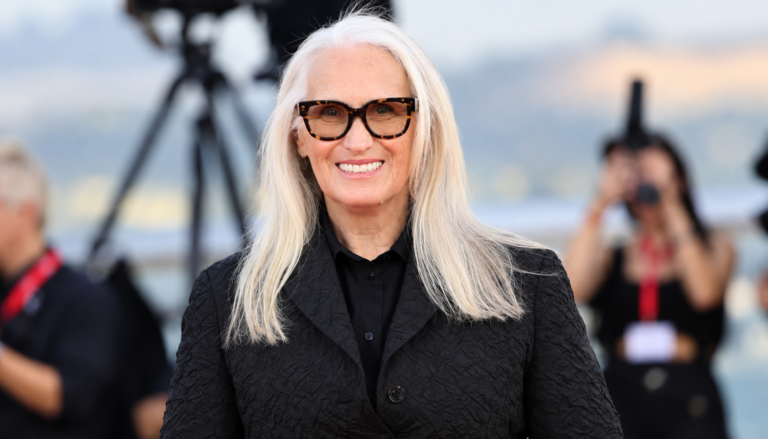
Jane Campion net worth 2026 is estimated at approximately $10 million, placing one of cinema’s most decorated female directors among the most accomplished — though far from the wealthiest — filmmakers working today. Over a career spanning more than four decades, Campion has earned her fortune through directing fees, screenwriting royalties, producing credits, television deals, teaching positions, and the enduring commercial afterlife of films that have collectively grossed well over $200 million worldwide.
What makes Campion’s financial story unusual is the deliberate pace at which she has worked. She has directed just eight feature films across forty years, a filmography built on artistic conviction rather than volume. Yet within that selective body of work sits The Piano — a $7 million production that returned $140 million at the global box office — and The Power of the Dog, a Netflix acquisition that earned twelve Academy Award nominations and secured Campion’s place as only the third woman in history to win the Best Director Oscar.
At 72, Campion is not slowing down. In June 2026, she confirmed she is developing her first-ever musical film, reportedly in collaboration with Netflix once again, signaling a new chapter for a filmmaker who once believed The Power of the Dog would be her final work.
| Quick Overview | Details |
|---|---|
| Full Name | Dame Elizabeth Jane Campion, DNZM |
| Net Worth (2026) | ~$10 million |
| Date of Birth | April 30, 1954 (age 72) |
| Birthplace | Wellington, New Zealand |
| Nationality | New Zealander |
| Profession | Director, Screenwriter, Producer |
| Education | Victoria University of Wellington (BA Anthropology); Sydney College of the Arts; Australian Film, Television and Radio School |
| Years Active | 1982–present |
| Notable Works | The Piano (1993), The Power of the Dog (2021), Top of the Lake (2013–2017) |
| Academy Awards | 2 wins (Best Original Screenplay, Best Director) from 4 nominations |
| Total Awards | 101 wins from 172 nominations across career |
| Spouse | Colin Englert (m. 1992; div. 2001) |
| Children | Jasper Englert (1993, deceased), Alice Englert (b. 1994) |
| Residence | Sydney, Australia |
| Upcoming Project | Untitled musical film (2026, in development with Netflix) |
In this article12 sections
- 01Where the $10 Million Comes From
- 02Early Life and Education
- 03The Piano
- 04Complete Filmography and Career Earnings
- 05Academy Awards and Major Honors
- 06The Power of the Dog
- 07Top of the Lake
- 08Personal Life
- 09Jane Campion Compared to Other Trailblazing Female Directors’ Net Worth
- 10Upcoming Musical Project and Current Activities (2026)
- 11Career Earnings Timeline
- 12FAQs About Jane Campion Net Worth 2026
Jane Campion Net Worth Breakdown — Where the $10 Million Comes From
Jane Campion’s estimated $10 million net worth reflects a career defined by critical prestige rather than blockbuster paydays. Unlike directors who work at franchise scale — churning out sequels and tent-pole releases — Campion has built her wealth methodically through a combination of directing and writing fees, backend royalties, television production deals, teaching income, and property ownership.
Her most commercially significant project remains The Piano, which earned approximately $140 million worldwide against a modest $7 million budget. As both writer and director, Campion would have received both her directing fee and residual participation from the film’s extraordinary returns. The film’s distributor, Miramax, drove an aggressive awards campaign that elevated the movie’s commercial performance across international markets — it became the highest-grossing film in New Zealand history at the time of release and performed strongly in France ($16 million), Australia ($7 million), and North America ($39 million).
Her Netflix deal for The Power of the Dog, while details remain confidential, followed industry patterns for Oscar-caliber acquisitions. The film carried a production budget estimated at $35 to $39 million, and Netflix reportedly spent an additional $50 million on its awards campaign — suggesting the streamer paid a substantial acquisition fee. For a director of Campion’s stature delivering a prestige title, industry analysts estimate her combined directing and producing fees likely fell in the range of $2 to $5 million.
Additional income streams include her two-season television series Top of the Lake (BBC/Sundance Channel), her faculty position at the European Graduate School in Switzerland, royalties from her extensive filmography, and property holdings in both Sydney, Australia, and New Zealand.
Early Life and Education — From Wellington Theatre Royalty to Art School Rebel (1954–1984)
Elizabeth Jane Campion was born on April 30, 1954, in Wellington, New Zealand, into a family steeped in the performing arts. Her father, Richard M. Campion, was a theatre and opera director, while her mother, Edith Campion (née Beverley Georgette Hannah), was an actress, writer, and heiress. The family held prominence in New Zealand’s cultural scene — Richard and Edith co-founded the New Zealand Players, one of the country’s first professional touring theatre companies.
On her mother’s side, Campion descended from considerable wealth. Her maternal great-grandfather, Robert Hannah, founded the Hannahs shoe company, one of New Zealand’s oldest retail businesses. Her paternal family had roots in the Exclusive Brethren, a fundamentalist Christian sect, though the Campion household itself embraced the arts rather than strict religion.
Jane grew up alongside her older sister Anna Campion (a filmmaker in her own right) and younger brother Michael Campion, surrounded by rehearsals, backstage culture, and the creative friction of a household where both parents performed. Despite this upbringing — or perhaps because of it — young Jane initially avoided the performing arts entirely.
She attended Queen Margaret College and then Wellington Girls’ College before enrolling at Victoria University of Wellington, where she earned a Bachelor of Arts in Anthropology in 1975. The degree reflected her interest in human behavior and social structures — themes that would later define her filmmaking.
After graduating, Campion traveled to Europe and enrolled at Chelsea Art School in London in 1976, studying painting. She then relocated to Sydney, Australia, completing a Graduate Diploma in Visual Arts with a painting major at the Sydney College of the Arts in 1981. Her transition from visual art to moving images came during this period, when she discovered that film allowed her to combine her anthropological curiosity with her visual instincts.
In 1981, she entered the Australian Film, Television and Radio School (AFTRS), graduating in 1984. Her student short films — particularly Peel: An Exercise in Discipline (1982) and A Girl’s Own Story (1984) — announced an unmistakable new voice. Peel would go on to win the Short Film Palme d’Or at Cannes in 1986, making Campion the first New Zealand filmmaker to win any Palme d’Or.
The Piano — A $7 Million Masterpiece That Returned $140 Million (1993)
The Piano remains the financial and artistic cornerstone of Jane Campion’s career. Released in 1993, the film tells the story of a mute Scottish woman (Holly Hunter) who arrives in colonial New Zealand with her young daughter and her beloved piano, only to find herself trapped between an emotionally distant husband (Sam Neill) and a rough settler (Harvey Keitel) who bargains for her affection through the instrument.
Campion wrote the screenplay herself, and the film was produced by Jan Chapman through her production company with funding from CiBy 2000 (a French company). The budget was a modest $7 million — equivalent to approximately $15.6 million in 2025 dollars.
The returns were extraordinary. The Piano grossed $140 million worldwide, a twenty-fold return on investment that placed it among the most profitable independent films of the 1990s. In North America alone, the film earned $39 million through Miramax distribution, while France contributed $16 million, Australia $7 million, and New Zealand NZ$3.8 million — making it the highest-grossing film in New Zealand history at the time.
At the 1994 Academy Awards, The Piano received eight nominations and won three Oscars: Best Actress (Holly Hunter), Best Supporting Actress (Anna Paquin, at 11 years old, the second-youngest winner ever), and Best Original Screenplay (Campion). Campion herself was nominated for Best Director, becoming only the second woman in Oscar history to receive that nomination, after Lina Wertmüller in 1977.
The film also won the Palme d’Or at Cannes — shared with Chen Kaige’s Farewell My Concubine — making Campion the first woman ever to win the festival’s top prize for a feature film. She remains the only filmmaker in Cannes history to have won the Palme d’Or for both a short film and a feature.
Complete Filmography and Career Earnings — Eight Features in Four Decades
Jane Campion’s filmography is remarkably selective. She has directed just eight feature films, each separated by years of deliberation. This approach has limited her cumulative earnings compared to more prolific directors but has ensured that nearly every project carried significant critical weight.
Feature Films
Sweetie (1989) — Campion’s feature debut screened at Cannes and established her as a filmmaker willing to explore uncomfortable family dynamics. The film earned modest box office returns but received strong critical attention in Australia and Europe.
An Angel at My Table (1990) — Originally produced as a three-part television miniseries, this biographical drama about New Zealand author Janet Frame was released theatrically internationally. It won the Silver Lion at the Venice Film Festival and performed well across art house circuits.
The Piano (1993) — Worldwide gross: $140 million on a $7 million budget. Career-defining work.
The Portrait of a Lady (1996) — Campion’s Henry James adaptation starred Nicole Kidman, John Malkovich, and Barbara Hershey. The film earned approximately $14 million worldwide against a larger studio budget, representing a commercial disappointment despite mixed-to-positive reviews.
Holy Smoke! (1999) — Starring Kate Winslet and Harvey Keitel, this film earned approximately $3.8 million worldwide, marking the beginning of a commercially lean period.
In the Cut (2003) — An erotic thriller starring Meg Ryan, this represented Campion’s most divisive work. It earned approximately $24 million worldwide but was met with polarized critical reception.
Bright Star (2009) — A period romance about the love affair between poet John Keats and Fanny Brawne, starring Ben Whishaw and Abbie Cornish. The film earned approximately $12.5 million worldwide on a modest budget and screened in competition at Cannes.
The Power of the Dog (2021) — Acquired by Netflix, the film received a limited theatrical release earning just $417,022 at the box office — typical for Netflix-distributed prestige films designed for streaming audiences. The real financial story is the Netflix acquisition deal and the platform’s estimated $50 million awards campaign spend.
Television
Top of the Lake (2013) — A critically acclaimed crime drama miniseries co-created with Gerard Lee and co-directed with Garth Davis, starring Elisabeth Moss. The series aired on BBC UKTV and the Sundance Channel in the United States. It received three Primetime Emmy nominations.
Top of the Lake: China Girl (2017) — The second season, co-directed with Ariel Kleiman, continued Moss’s detective Robin Griffin story. Both seasons were produced by See-Saw Films, with Campion serving as writer, director, and executive producer.
Short Films
Campion’s early short films — Peel (1982), Passionless Moments (1983), A Girl’s Own Story (1984), and After Hours (1984) — collectively won multiple festival awards and established her international reputation before she directed her first feature.
Academy Awards and Major Honors — 101 Wins from 172 Nominations
Jane Campion’s awards record is staggering for a filmmaker with such a compact body of work. Across her career, she has accumulated 101 wins from 172 nominations at major film festivals, critics’ organizations, and industry awards bodies.
Academy Awards (Oscars)
Campion has received 4 Oscar nominations and won 2:
- Best Original Screenplay — The Piano (1994) ✓ WON
- Best Director — The Piano (1994) — Nominated
- Best Adapted Screenplay — The Power of the Dog (2022) — Nominated
- Best Director — The Power of the Dog (2022) ✓ WON
Her 2022 win made her the third woman in history to win Best Director, following Kathryn Bigelow (The Hurt Locker, 2010) and Chloé Zhao (Nomadland, 2021). She remains the only woman to have been nominated twice for Best Director.
Cannes Film Festival
- Short Film Palme d’Or — Peel (1986) ✓ WON
- Palme d’Or — The Piano (1993) ✓ WON
She is the only filmmaker in Cannes history to win both the Short Film and Feature Film Palme d’Or — a distinction that transcends gender.
Venice Film Festival
- Silver Lion for Best Direction — The Power of the Dog (2021) ✓ WON
- Special Jury Prize — An Angel at My Table (1990) ✓ WON
Other Major Awards
- BAFTA Awards: 5 wins from 18 nominations (Best Film and Best Direction for The Power of the Dog)
- Golden Globe Awards: 4 wins from 14 nominations (Best Motion Picture — Drama, Best Director, Best Supporting Actor for The Power of the Dog)
- Directors Guild of America: First woman to win the DGA Award for Feature Film (The Power of the Dog)
- Writers Guild of America: 1 win
- Critics’ Choice Awards: 3 wins (including Best Picture for The Power of the Dog)
- AACTA Awards (Australia): 7 wins from 7 nominations
- Dame Companion of the New Zealand Order of Merit (DNZM): Awarded in the 2016 New Year Honours for services to film
The Power of the Dog — Netflix Deal and Career Comeback (2021)
After Bright Star in 2009, Jane Campion stepped away from feature filmmaking for twelve years, focusing instead on her television work with Top of the Lake. Many assumed she had retired from cinema. Then, in 2019, news broke that she was adapting Thomas Savage’s 1967 novel The Power of the Dog — a psychological western set in 1920s Montana.
Netflix acquired the project from Cross City Films, assembling a cast that included Benedict Cumberbatch, Kirsten Dunst, Jesse Plemons, and Kodi Smit-McPhee. The film was shot primarily in New Zealand (standing in for Montana) with a production budget estimated at $35 to $39 million — a significant investment for an art house drama.
The production companies included See-Saw Films, BBC Film, the New Zealand Film Commission, and Cross City Films. Netflix handled global distribution, with limited theatrical runs beginning in November 2021 before the streaming premiere on December 1, 2021.
The film became the awards-season frontrunner, receiving 12 Academy Award nominations — the most for any film at the 94th ceremony. While it won only Best Director, the Netflix awards campaign (estimated at $50 million) demonstrated the streamer’s commitment to prestige filmmaking.
For Campion, the film proved transformative. The DGA Award win, the BAFTA wins for Best Film and Best Direction, and the Oscar made her the most decorated female director in cinema history by a significant margin.
Campion later described the success as giving her “a sort of carte blanche” for future projects — a creative freedom rare in an industry that typically measures directors by their most recent opening weekend.
Top of the Lake — Television Earnings and Critical Success (2013–2017)
Between her features Bright Star (2009) and The Power of the Dog (2021), Campion channeled her creative energy into television. Top of the Lake, a crime drama she co-created with writer Gerard Lee, premiered in 2013 and represented her first work for the small screen.
The series starred Elisabeth Moss as Detective Robin Griffin investigating the disappearance of a pregnant twelve-year-old in a remote New Zealand town. Campion co-directed the first season with Garth Davis (who later directed Lion) and the second season, China Girl (2017), with Ariel Kleiman.
Produced by See-Saw Films and co-commissioned by BBC UKTV and the Sundance Channel, the series gave Campion both creative control and steady income across a four-year production cycle — a contrast to the feast-or-famine economics of independent feature filmmaking.
The series earned three Primetime Emmy nominations and won numerous critics’ awards. For Campion, it provided directing and executive producing fees across twelve episodes spanning two seasons — representing likely her most financially consistent period of work outside The Piano.
Personal Life — Family, Marriage, and Daughter Alice Englert
Jane Campion’s personal life has been marked by both creative partnership and private grief.
She married Colin David Englert, a second unit director who worked with her on The Piano, in 1992. Their first child, Jasper Englert, was born in 1993 but tragically died just twelve days after birth. The loss occurred during the same year The Piano premiered at Cannes and swept the international awards circuit — a juxtaposition of professional triumph and personal devastation that Campion has rarely discussed publicly.
Their second child, Alice Englert, was born in 1994 and has followed her mother into the arts. Alice is an actress and director in her own right, known for her roles in Beautiful Creatures (2013) and Them That Follow (2019), as well as appearing in her mother’s Top of the Lake: China Girl.
Campion and Colin Englert divorced in 2001 after nine years of marriage. Since the divorce, Campion has maintained a notably private personal life, dividing her time between Sydney, Australia — her primary residence since the 1980s — and New Zealand, where she retains deep family and professional connections.
Her mother, Edith Campion, continued acting and writing into later life, and the family’s multi-generational involvement in the arts remains central to Jane’s identity. Her sister Anna Campion is also a filmmaker, and her brother Michael has maintained connections to the New Zealand arts community.
Jane Campion Compared to Other Trailblazing Female Directors’ Net Worth
Jane Campion’s $10 million net worth reflects the economic realities of art house filmmaking rather than any shortage of talent or recognition. Compared to other acclaimed female directors, her wealth underscores the financial gap between prestige cinema and commercial franchise filmmaking.
| Director | Estimated Net Worth | Notable Work |
|---|---|---|
| Kathryn Bigelow | ~$50 million | The Hurt Locker, Zero Dark Thirty |
| Sofia Coppola | ~$40 million | Lost in Translation, The Bling Ring |
| Greta Gerwig | ~$30 million | Barbie, Little Women |
| Ava DuVernay | ~$20 million | Selma, 13th, A Wrinkle in Time |
| Jane Campion | ~$10 million | The Piano, The Power of the Dog |
| Chloé Zhao | ~$10 million | Nomadland, Eternals |
Kathryn Bigelow’s $50 million fortune reflects higher-budget action films and longer directing credits for studios, while Sofia Coppola’s wealth includes family connections to the Coppola filmmaking dynasty and wine business. Greta Gerwig’s net worth surged with Barbie (2023), which grossed $1.4 billion worldwide.
Campion’s trajectory — prioritizing creative control over commercial scale — has produced the most critically honored career of any female director in history while generating more modest financial returns. Her two Palme d’Or wins (short and feature), her two Oscar wins, and her 101 total career awards from 172 nominations are records unmatched by any director on this list.
Upcoming Musical Project and Current Activities (2026)
In June 2026, at the Taormina Film Festival in Italy where she served as jury president, Jane Campion confirmed she is developing her first-ever musical film. The announcement came as a surprise to an industry that had assumed the 72-year-old director might not return to feature filmmaking.
Campion told Variety that “The Power of the Dog” gave her “a sort of carte blanche” and that she intends to use that creative freedom for a genre she has never attempted. Reports indicate the project involves a collaboration with Netflix, though specific details — including cast, setting, and storyline — remain under wraps.
The musical represents a significant departure. Campion’s previous work has been defined by naturalistic performances, literary adaptations, and psychological drama. A musical would require an entirely different set of skills — choreography, musical arrangement, lip-synced and live performance — while presumably retaining the emotional intensity that defines her filmmaking voice.
At Taormina, Campion also reunited with Holly Hunter, the actress who won an Oscar for The Piano over three decades earlier. The reunion underscored the enduring relationships that characterize Campion’s career.
Campion had previously spoken about establishing a pop-up film school in New Zealand for aspiring filmmakers — an initiative she described as her post-directing contribution to the industry. Whether the musical project delays or complements that plan remains to be seen.
She continues to serve on the faculty of the European Graduate School in Saas-Fee, Switzerland, where she teaches filmmaking alongside other prominent artists and theorists.
Jane Campion Net Worth Over Time — Career Earnings Timeline
| Period | Key Work | Estimated Earnings Impact |
|---|---|---|
| 1982–1988 | Short films (Peel, A Girl’s Own Story) | Festival recognition; minimal income |
| 1989–1990 | Sweetie, An Angel at My Table | Art house directing fees; Venice Silver Lion |
| 1993–1995 | The Piano | Major earnings from directing/writing fees + backend on $140M gross |
| 1996–2003 | Portrait of a Lady, Holy Smoke!, In the Cut | Studio directing fees; mixed commercial returns |
| 2009 | Bright Star | Moderate directing/producing fees |
| 2013–2017 | Top of the Lake (2 seasons) | Television directing + EP fees across 12 episodes |
| 2021–2022 | The Power of the Dog | Netflix deal (est. $2–5M directing/producing) + awards prestige |
| 2026–present | Musical film (in development) | New Netflix deal; TBD |
FAQs About Jane Campion Net Worth 2026
How much is Jane Campion worth in 2026?
Jane Campion’s net worth in 2026 is estimated at approximately $10 million. Her wealth comes from directing and screenwriting fees, backend participation from films like The Piano ($140M worldwide gross), television producing for Top of the Lake, her Netflix deal for The Power of the Dog, teaching income from the European Graduate School, and property holdings in Sydney and New Zealand.
What is Jane Campion’s most successful film financially?
The Piano (1993) is Jane Campion’s biggest commercial success by a wide margin. Made for just $7 million, it earned $140 million worldwide — a twenty-fold return on investment. The film grossed $39 million in North America, $16 million in France, $7 million in Australia, and NZ$3.8 million in New Zealand, where it became the highest-grossing film in national history at the time.
How many Oscars has Jane Campion won?
Jane Campion has won two Academy Awards: Best Original Screenplay for The Piano (1994) and Best Director for The Power of the Dog (2022). She has been nominated four times total. She is only the third woman in Oscar history to win Best Director, after Kathryn Bigelow and Chloé Zhao, and the only woman to be nominated for Best Director twice.
Is Jane Campion the first woman to win the Palme d’Or?
Yes, Jane Campion is the first woman to win the Palme d’Or for a feature film, earning the award for The Piano at the 1993 Cannes Film Festival (shared with Chen Kaige’s Farewell My Concubine). She had previously won the Short Film Palme d’Or for Peel in 1986, making her the only filmmaker in Cannes history to win both.
What is Jane Campion’s new movie?
In June 2026, Jane Campion confirmed she is developing her first musical film, reportedly in collaboration with Netflix. The project is in early development with no announced cast, title, or release date. Campion described her Oscar win for The Power of the Dog as giving her “a sort of carte blanche” for the new project.
Where does Jane Campion live?
Jane Campion has lived primarily in Sydney, Australia, since the early 1980s when she attended art school and film school there. She also maintains connections to New Zealand, her country of birth, where her family remains prominent in the arts community. She has spoken about plans to establish a pop-up film school in New Zealand.
Who is Alice Englert?
Alice Englert (born 1994) is Jane Campion’s daughter with ex-husband Colin Englert. She is an actress and filmmaker known for Beautiful Creatures (2013), Them That Follow (2019), and a role in her mother’s Top of the Lake: China Girl (2017). Alice represents the third generation of the Campion family to work in the performing arts.
How does Jane Campion’s net worth compare to other female directors?
Jane Campion’s $10 million net worth is modest compared to directors who work at studio scale. Kathryn Bigelow is worth approximately $50 million, Sofia Coppola around $40 million, and Greta Gerwig approximately $30 million after Barbie‘s $1.4 billion gross. Campion’s lower figure reflects her art house focus and selective filmography of just eight features over four decades.
What awards has Jane Campion won for The Power of the Dog?
The Power of the Dog earned Campion numerous major awards including the Academy Award for Best Director, the BAFTA for Best Film and Best Direction, the Golden Globe for Best Motion Picture — Drama and Best Director, the Venice Silver Lion for Best Direction, the DGA Award (making her the first woman to win), and the Critics’ Choice Award for Best Picture, among many others. The film received 12 Oscar nominations — the most of any film that year.
Did Jane Campion work with Netflix?
Yes, Netflix acquired The Power of the Dog from Cross City Films in 2019 and served as its global distributor. The film had a limited theatrical release before premiering on Netflix on December 1, 2021. Netflix reportedly spent approximately $50 million on the awards campaign. Campion’s upcoming musical film is also reportedly being developed with Netflix.
What did Jane Campion study in university?
Jane Campion earned a Bachelor of Arts in Anthropology from Victoria University of Wellington in 1975. She later studied painting at Chelsea Art School in London and the Sydney College of the Arts (graduating 1981) before attending the Australian Film, Television and Radio School (graduating 1984). She also obtained an early education at Queen Margaret College and Wellington Girls’ College in New Zealand.
Why is Jane Campion called Dame?
Jane Campion was appointed a Dame Companion of the New Zealand Order of Merit (DNZM) in the 2016 New Year Honours for her services to film. The title “Dame” is the female equivalent of “Sir” in the New Zealand and British honours systems. The honor recognized her four decades of filmmaking achievement and her contribution to New Zealand’s international cultural reputation.
You must read our other blogs :
Atoya Burleson Net Worth 2026 — The Complete Story Behind the Brand She Built on Her Own Terms
Cristiano Ronaldo Net Worth 2026 — Football’s First Billionaire and the $1.2 Billion Empire Behind the GOAT Debate