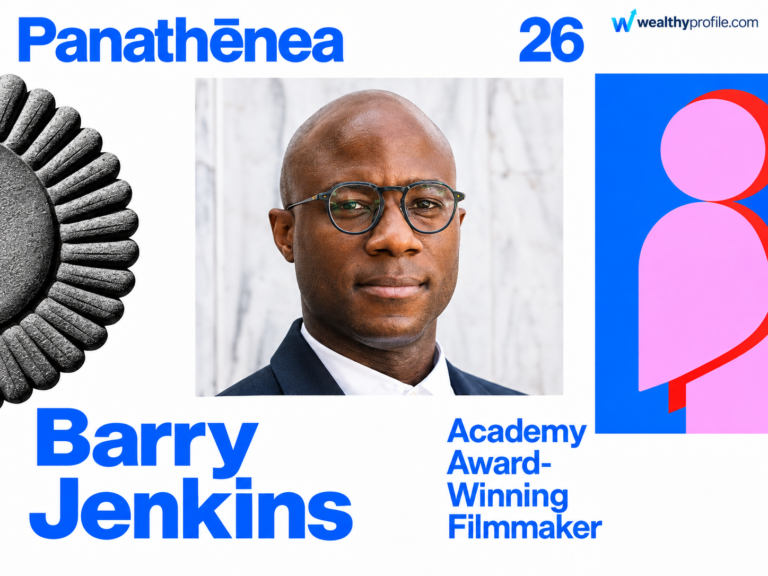
Barry Jenkins net worth 2026 is estimated at between $10 million and $15 million, built through one of the most remarkable career trajectories in modern cinema. The Oscar-winning director of Moonlight went from growing up on food stamps in Liberty City, Miami — raised by a woman who was not his blood relative while his mother battled crack cocaine addiction — to winning the Academy Award for Best Picture, directing a Disney blockbuster that grossed $723 million worldwide, and landing a slate of upcoming projects that includes a Zendaya-starring biopic for A24 and a sci-fi thriller with Glen Powell for Universal.
What makes Barry Jenkins’ financial story unusual for a filmmaker of his stature is the gap between artistic acclaim and wealth accumulation. Directors who win Best Picture typically command eight-figure net worths within a few years. Jenkins, however, spent eight years between his first and second feature films, worked as a carpenter during the gap, and has consistently chosen artistically ambitious projects over commercially driven ones. His net worth reflects a filmmaker who prioritizes craft over commerce — and who only recently, with Mufasa: The Lion King, stepped into the blockbuster arena that generates the kind of directing fees that build serious wealth.
The $10–$15 million estimate accounts for his directing fees across four feature films (including a Disney tentpole), his HBO and A24 first-look deal through his production company Pastel, his Amazon deal for The Underground Railroad, screenwriting income, producing credits, and the financial upside of upcoming projects. With Be My Baby (A24/Zendaya) and The Natural Order (Universal/Glen Powell) in development, Jenkins is entering the most financially productive phase of his career.
| Quick Overview | Details |
|---|---|
| Full Name | Barry Jenkins |
| Date of Birth | November 19, 1979 |
| Age | 46 years old |
| Birthplace | Jackson Memorial Hospital, Miami, Florida |
| Raised In | Liberty City, Miami, Florida |
| Nationality | American |
| Education | Florida State University, College of Motion Picture Arts (B.A.) |
| Spouse | Lulu Wang (married December 2024) |
| Production Company | Pastel |
| First-Look Deal | HBO, HBO Max, and A24 (signed 2021) |
| Academy Awards | Best Picture, Best Adapted Screenplay (Moonlight, 2017) |
| Feature Films Directed | 4 (Medicine for Melancholy, Moonlight, If Beale Street Could Talk, Mufasa) |
| Total Box Office (Films Directed) | ~$810 million worldwide |
| Estimated Net Worth (2026) | $10 million–$15 million |
| Known For | Moonlight, Mufasa: The Lion King, If Beale Street Could Talk, The Underground Railroad |
In this article16 sections
- 01Early Life in Liberty City
- 02Education
- 03Medicine for Melancholy
- 04The Eight-Year Wilderness
- 05Moonlight
- 06If Beale Street Could Talk
- 07The Underground Railroad
- 08The Pastel Production Company and the HBO/A24 First-Look Deal (2021)
- 09Mufasa
- 10Upcoming Projects
- 11Barry Jenkins Income Breakdown
- 12Barry Jenkins Personal Life
- 13Barry Jenkins Compared to Other Oscar-Winning Directors’ Net Worth
- 14Barry Jenkins Net Worth Growth Timeline (2003–2026)
- 15How Barry Jenkins’ Career Defies Typical Hollywood Economics
- 16Frequently Asked Questions About Barry Jenkins Net Worth 2026
Early Life in Liberty City — A Childhood That Shaped an Artist (1979–1997)
Barry Jenkins was born on November 19, 1979, at Jackson Memorial Hospital in Miami, Florida. He was the youngest of four siblings, each with a different father. His biological father left his mother while she was still pregnant and died when Jenkins was twelve. Jenkins has said publicly: “I have no idea who my ‘real’ father is.”
His mother was a teenage runaway who became a nurse but struggled with crack cocaine addiction throughout Jenkins’ childhood. Unable to care for him, she effectively abandoned the boy, who was raised primarily by an older woman in the Liberty City neighborhood — a woman who had no blood relation to him but who had previously cared for his mother during her own teenage years.
The living conditions were harsh. Jenkins grew up in an overcrowded apartment in one of Miami’s most economically disadvantaged neighborhoods, surrounded by the crack epidemic that defined urban America in the 1980s and 1990s. As he would later describe it: “I wasn’t raised by anyone who was a blood relative of mine, and yet I could see my blood relatives all around the neighborhood.”
Despite the environment, Jenkins found outlets. He attended Miami Northwestern Senior High School, where he played football, ran track, and discovered a passion for creative writing. He did not grow up watching art-house cinema or dreaming of Hollywood. The world of independent filmmaking was entirely unknown to him until he arrived at college.
These experiences — abandonment, poverty, the search for identity in a world that offered few models — would become the emotional foundation of virtually every project Jenkins later directed. Moonlight, his masterpiece, draws directly from his Liberty City childhood. If Beale Street Could Talk and The Underground Railroad explore related themes of Black survival, love under pressure, and the systems that separate families.
Education — Florida State University and the Birth of a Filmmaker (1997–2003)
Barry Jenkins chose Florida State University for a reason that says everything about where he came from: he thought it was “the blackest place in America.” It was not an informed assessment of the film school’s reputation — he barely knew what film school was. But the decision changed his life.
At FSU’s College of Motion Picture Arts, Jenkins found collaborators who would define his entire career. Cinematographer James Laxton, producer Adele Romanski, and editors Nat Sanders and Joi McMillon all attended FSU alongside Jenkins. These creative partnerships have lasted over two decades and produced every major project in Jenkins’ filmography.
Jenkins joined Alpha Phi Alpha fraternity and took a deliberate year off from the program to develop technical skills before formally beginning his coursework. He graduated with a Bachelor of Arts in filmmaking and immediately moved to Los Angeles, where the realities of the industry hit hard.
His early work in LA included a stint as a production assistant at Oprah Winfrey’s Harpo Productions. But Jenkins quickly became disillusioned with the mainstream production model. The assembly-line approach to content creation clashed with his instincts as an artist, and he drifted toward the independent film world that would eventually make his name.
Medicine for Melancholy — A $15,000 Debut That Announced a Voice (2008)
Barry Jenkins’ first feature film, Medicine for Melancholy, was made on a budget of approximately $15,000. The film — a character study of two young Black San Franciscans navigating race, gentrification, and romantic uncertainty over 24 hours — grossed nearly ten times its budget in limited theatrical release.
More importantly, it earned Jenkins an Independent Spirit Award nomination for Best First Feature and introduced his distinctive visual and narrative style to the independent film community. Critics immediately recognized the influence of Claire Denis, Wong Kar-wai, and Hou Hsiao-hsien in his work — filmmakers whose emphasis on atmosphere, texture, and emotional states over plot mechanics would become hallmarks of Jenkins’ own approach.
The financial return was modest by any standard. But Medicine for Melancholy established Jenkins as a filmmaker worth watching — a designation that carried enormous emotional weight but generated virtually no wealth.
The Eight-Year Wilderness — Carpentry, Failed Scripts, and Creative Survival (2008–2016)
What happened after Medicine for Melancholy is one of the most instructive chapters in modern filmmaking. Despite critical acclaim, Jenkins could not get another feature made for eight years.
During this period, he wrote multiple screenplays that never reached production. He developed a time travel epic for Focus Features that incorporated Stevie Wonder imagery. He wrote adaptations of James Baldwin’s If Beale Street Could Talk and Bill Clegg’s memoir Portrait of an Addict as a Young Man. He was attached to adapt Colson Whitehead’s The Intuitionist. None of these projects materialized.
To pay bills, Jenkins worked as a carpenter. He co-founded Strike Anywhere, a small advertising company. He directed a few short films, including Remigration (2011), a sci-fi short about gentrification. He contributed briefly to HBO’s The Leftovers as a writer, though his involvement was minimal.
In 2012, he received a United States Artists Fellowship grant — financial recognition of his potential that helped sustain him during the lean years. But by any conventional career metric, Barry Jenkins was a failed filmmaker for nearly a decade.
The financial impact of this period is significant to understanding his current net worth. While peers who broke through in their late twenties and early thirties spent the 2010s accumulating directing fees, Jenkins spent them surviving. The eight-year gap means he has roughly half the earning history of directors with comparable acclaim.
Moonlight — The $1.5 Million Film That Won Best Picture and Changed Everything (2016)
Moonlight is the project that transformed Barry Jenkins from a struggling independent filmmaker into an Academy Award winner. The financial and artistic details of its creation are extraordinary.
Budget: Approximately $1.5 million (Jenkins has clarified it was closer to $1.2 million for production, rising to $1.5 million through post-production). This makes Moonlight the lowest-budget film ever to win the Academy Award for Best Picture.
Box office: $65.3 million worldwide ($27.9 million domestic, $37.5 million international) — a return of approximately 43 times its production cost.
Creation timeline: Jenkins wrote the screenplay in just ten days, adapting it from Tarell Alvin McCraney’s unpublished play In Moonlight Black Boys Look Blue. The film was shot in 25 days on location in Miami, often in the same Liberty City neighborhoods where Jenkins grew up.
Awards: Moonlight won three Academy Awards at the 89th ceremony in 2017 — Best Picture, Best Adapted Screenplay (shared with McCraney), and Best Supporting Actor (Mahershala Ali). It received eight nominations total and also won the Golden Globe for Best Picture – Drama. In 2022, Sight and Sound magazine ranked it the 60th greatest film of all time based on a poll of 1,639 critics.
Historic significance: Moonlight became the first LGBTQ-themed film with an all-Black cast to win Best Picture. Mahershala Ali became the first Muslim actor to win an Academy Award. Editor Joi McMillon became the first Black woman nominated for Best Film Editing. Jenkins himself became only the second Black director to helm a Best Picture winner.
Financial impact on Jenkins: While the Best Picture win catapulted his reputation, Jenkins’ directing fee for Moonlight was almost certainly in the low six figures — consistent with standard indie directing compensation for a $1.5 million production. The film’s box office success benefited distributor A24 far more than it benefited Jenkins personally, as independent film directors rarely participate in backend profit-sharing at this budget level.
What Moonlight gave Jenkins was something more valuable than money: leverage. After winning Best Picture, he could command significantly higher fees, attract studio projects, and negotiate production deals that would generate real wealth over the following decade.
If Beale Street Could Talk — The Baldwin Adaptation That Deepened His Reputation (2018)
Jenkins followed Moonlight with If Beale Street Could Talk, an adaptation of James Baldwin’s 1974 novel about a young Black couple in 1970s Harlem separated by a wrongful imprisonment. The project was deeply personal for Jenkins, who had been obsessed with Baldwin’s work since his early career and had been developing the adaptation for years.
Budget: $12 million — a significant step up from Moonlight’s $1.5 million.
Box office: $20.6 million worldwide ($14.9 million domestic, $5.6 million international). While not a commercial blockbuster, the film performed respectably for an art-house drama and earned back its production budget.
Awards: Regina King won both the Academy Award and Golden Globe for Best Supporting Actress. Jenkins received an Academy Award nomination for Best Adapted Screenplay. The film was selected as a Top 10 film of 2018 by both the National Board of Review and the American Film Institute. Former President Barack Obama named it among his favorite films of that year.
Critical reception: 95 percent approval on Rotten Tomatoes (363 reviews) and 87 on Metacritic, indicating universal acclaim. Critics praised Jenkins’ visual poetry and the film’s emotional power.
Financial impact: Jenkins’ directing fee for a $12 million Annapurna Pictures production was likely in the range of $500,000 to $1 million — a substantial increase from Moonlight but still modest by A-list director standards. The film demonstrated that Jenkins could deliver critically acclaimed work with higher budgets, setting the stage for his eventual move to studio filmmaking.
The Underground Railroad — Amazon, 10 Hours, and a Passion Project (2021)
Jenkins’ most ambitious undertaking was The Underground Railroad, a ten-episode limited series for Amazon Prime Video adapted from Colson Whitehead’s Pulitzer Prize-winning novel. The project consumed years of Jenkins’ career and represented his most immersive directorial effort.
Jenkins created, directed all ten episodes, wrote multiple episodes, and served as executive producer — an extraordinary level of involvement for a prestige television project. The series was described as a personal passion project, and the emotional intensity of the production was evident in both the finished work and Jenkins’ public comments about the experience.
Awards and recognition: The Underground Railroad received seven Emmy Award nominations, including Outstanding Directing for a Limited Series or Movie. It won a Peabody Award and was ranked among the BBC’s greatest television shows of the 21st century. Jenkins won the DGA Award for Outstanding Directing of a Limited Series.
Financial impact: Amazon overall television deals for creator-showrunners of Jenkins’ caliber typically range from $5 million to $15 million over a multi-year term, though the specific terms of Jenkins’ Amazon deal have not been publicly disclosed. The series represented his first major television payday and likely constitutes one of the largest single income events of his career.
Following The Underground Railroad, Jenkins moved his overall television deal from Amazon to HBO/HBO Max.
The Pastel Production Company and the HBO/A24 First-Look Deal (2021)
In April 2021, Barry Jenkins’ production company Pastel signed a first-look deal with HBO, HBO Max, and A24. The deal — which moved Jenkins from his previous arrangement with Amazon — positioned Pastel as a development hub for both film and television projects.
Under the Pastel banner, Jenkins has produced or executive-produced several notable projects:
Aftersun (2022): Charlotte Wells’ critically acclaimed debut starring Paul Mescal. Jenkins served as executive producer through Pastel.
All Dirt Roads Taste of Salt (2023): Raven Jackson’s debut feature, produced through Pastel. The film received widespread critical praise.
The Fire Inside (2024): A biographical drama about boxer Claressa Shields, for which Jenkins co-wrote the story and served as producer.
True Detective (2024): Jenkins served as executive producer on a later season of HBO’s anthology series.
The financial structure of first-look deals varies, but arrangements of this type for Oscar-winning filmmakers typically include annual overhead fees in the range of $1–$3 million, development funding, and production fees for each project that moves forward. The dual partnership with HBO (television) and A24 (film) gives Jenkins unusual flexibility to develop projects across both mediums.
Mufasa: The Lion King — The $723 Million Disney Blockbuster (2024)
Mufasa: The Lion King represents Barry Jenkins’ entry into blockbuster filmmaking and, almost certainly, the largest single directing fee of his career.
Budget: $200 million
Box office: $723 million worldwide ($255 million domestic, $468 million international) — making it the sixth-highest-grossing film of 2024.
Profitability: Deadline Hollywood calculated the film’s net profit at $175 million after all costs, placing it ninth on their list of 2024’s Most Valuable Blockbusters.
Critical reception: Mixed reviews with 56 percent on Rotten Tomatoes and 56 on Metacritic, though audiences gave it an A– CinemaScore grade.
Jenkins described the experience as “one of the best decisions I’ve ever made in my life,” though he also acknowledged that all-virtual filmmaking “is not my thing” and expressed a desire to return to physically grounded productions.
Financial impact: While Jenkins’ exact compensation for Mufasa has not been disclosed, directors of Disney tentpole animated features with $200 million budgets typically command directing fees in the range of $3–$7 million. Given Jenkins’ Oscar-winning status and the franchise’s importance to Disney (the 2019 Lion King grossed $1.66 billion), his fee was likely at the upper end of that range.
For context, the 2019 Lion King director Jon Favreau reportedly earned approximately $10 million for that film, though Favreau had a longer track record of blockbuster directing. Jenkins’ fee was likely somewhat lower but still represented a transformational payday relative to his previous projects.
Even at a conservative estimate of $4–$5 million, Mufasa would represent more income from a single project than Jenkins earned from Moonlight, If Beale Street Could Talk, and The Underground Railroad combined.
Upcoming Projects — Be My Baby, The Natural Order, and a Loaded Slate
Barry Jenkins enters the second half of the 2020s with the most commercially ambitious project slate of his career:
Be My Baby (A24) — Ronnie Spector Biopic Starring Zendaya
Announced in March 2025, Be My Baby will see Jenkins direct Zendaya as Ronnie Spector, the legendary frontwoman of The Ronettes. The screenplay is by Dave Kajganich, and A24 is producing. The film is expected to shoot in fall 2026.
The combination of Jenkins’ artistic sensibility, Zendaya’s box office draw (following Dune: Part Two and Challengers), and the rich dramatic material of Ronnie Spector’s life — including her abusive marriage to Phil Spector — positions this as both a prestige awards contender and a potential commercial hit.
The Natural Order (Universal) — Sci-Fi Thriller with Glen Powell
Also announced in 2025, The Natural Order is a sci-fi thriller starring Glen Powell, one of Hollywood’s hottest leading men following Top Gun: Maverick, Anyone But You, Twisters, and Hit Man. Jenkins co-wrote the screenplay with Matthew Aldrich. Universal is financing and distributing.
This project represents Jenkins’ entry into genre filmmaking and, given Universal’s investment and Powell’s commercial appeal, likely carries a directing fee significantly higher than his Mufasa compensation.
Other Projects in Development
Alvin Ailey biopic (Fox Searchlight): A biographical film about the legendary choreographer, in development since 2018.
Virunga (Netflix): A film adaptation connected to Leonardo DiCaprio, still in development.
The Knick Season 3: A potential continuation of the Steven Soderbergh medical drama, with Jenkins attached.
The depth of this slate suggests Jenkins’ annual income from development fees, producing credits, and option renewals alone likely exceeds $1–$2 million, independent of any active directing work.
Barry Jenkins Income Breakdown — How He Makes Money
Barry Jenkins’ income comes from multiple streams that reflect his dual status as both an independent auteur and a studio-level director:
1. Feature Film Directing Fees (Primary Income)
Jenkins has directed four feature films with escalating budgets:
| Film | Year | Budget | Estimated Directing Fee |
|---|---|---|---|
| Medicine for Melancholy | 2008 | $15,000 | Minimal (likely deferred) |
| Moonlight | 2016 | $1.5 million | ~$100,000–$200,000 |
| If Beale Street Could Talk | 2018 | $12 million | ~$500,000–$1 million |
| Mufasa: The Lion King | 2024 | $200 million | ~$4–$7 million (estimated) |
The trajectory from four-figure budgets to nine-figure budgets over 16 years illustrates both the pace and the unusual shape of Jenkins’ career.
2. Television Deals (Major Income)
Jenkins’ overall television deals — first with Amazon (The Underground Railroad) and then with HBO/HBO Max — represent multi-year commitments that include overhead payments, development funding, and per-project producing fees. These deals likely total $5–$10 million across their combined terms.
3. Screenwriting Income
Jenkins is credited as writer on Moonlight, If Beale Street Could Talk, Medicine for Melancholy, and as co-writer on The Fire Inside and The Natural Order. WGA-scale screenwriting fees for studio projects range from $150,000 to $400,000+, and Jenkins’ credits likely command above-scale rates.
4. Producing Credits
Through Pastel, Jenkins has produced or executive-produced Aftersun, All Dirt Roads Taste of Salt, The Fire Inside, and True Detective. Producing fees typically range from $50,000 to $500,000 per project depending on the level of involvement.
5. Residuals, Royalties, and Backend
Residuals from theatrical, streaming, and home video distribution of his filmography provide ongoing passive income. Moonlight and If Beale Street Could Talk continue to generate revenue through streaming licenses, while Mufasa’s $723 million box office likely includes some backend participation.
6. Speaking Engagements and Academic Appearances
As an Oscar winner, Jenkins commands significant fees for university lectures, film festival keynotes, and industry events. While not a primary income source, this likely adds $100,000–$300,000 annually.
Barry Jenkins Personal Life — Marriage to Lulu Wang and Life Beyond Film
Marriage to Lulu Wang
Barry Jenkins married filmmaker Lulu Wang in a private ceremony in December 2024 — the same weekend as the Mufasa: The Lion King premiere. Wang, best known for directing The Farewell (2019) starring Awkwafina, has been in a relationship with Jenkins since approximately 2018.
Jenkins has spoken publicly about the value of being married to a fellow filmmaker: “When you do something that’s very strange — which, I think directing movies is strange — it’s really wonderful to go home and there’s someone there who also does the same thing.”
Wang has been equally supportive, publicly celebrating Jenkins’ career milestones on social media. Their marriage represents one of the most creatively accomplished partnerships in contemporary cinema — two independent filmmakers who have both achieved critical acclaim and now navigate the industry together.
No Children
As of 2026, Jenkins and Wang do not have children.
Artistic Philosophy and Influences
Jenkins’ filmmaking is deeply influenced by Claire Denis (whose Friday Night inspired Medicine for Melancholy), Wong Kar-wai, Hou Hsiao-hsien, and Lynne Ramsay. He views Moonlight, If Beale Street Could Talk, and The Underground Railroad as a thematic trilogy examining abandonment — a theme rooted directly in his own childhood experience.
His work is characterized by lush, atmospheric cinematography (always in collaboration with James Laxton), emotionally immersive character studies, and a commitment to representing Black identity and LGBTQ+ experiences with nuance and dignity.
Recognition and Cultural Impact
Jenkins was included on the Time 100 list of most influential people in 2017. He has been recognized for consciously challenging stereotypes about Black masculinity on screen and for bringing intersectional representation to mainstream cinema. His influence extends beyond his own films — through Pastel, he has championed the work of debut filmmakers including Charlotte Wells (Aftersun) and Raven Jackson (All Dirt Roads Taste of Salt).
Barry Jenkins Compared to Other Oscar-Winning Directors’ Net Worth
Barry Jenkins’ estimated $10–$15 million net worth reflects the financial reality of a career built primarily in independent film and prestige television, with only one blockbuster directing credit:
| Director | Estimated Net Worth (2026) | Notable Work |
|---|---|---|
| Jordan Peele | ~$50 million | Get Out, Us, Nope |
| Guillermo del Toro | ~$40 million | The Shape of Water, Pan’s Labyrinth |
| Bong Joon-ho | ~$20 million | Parasite, Snowpiercer |
| Chloé Zhao | ~$10 million | Nomadland, Eternals |
| Barry Jenkins | $10–$15 million | Moonlight, Mufasa |
| Steve McQueen | ~$10 million | 12 Years a Slave, Small Axe |
| Taika Waititi | ~$15 million | Jojo Rabbit, Thor: Ragnarok |
The comparison is revealing. Jordan Peele, who broke through just one year after Jenkins with Get Out (2017), has accumulated significantly more wealth due to producing and writing commercially driven horror films. Taika Waititi’s Marvel directing credits pushed his net worth above the independent-film baseline. And Chloé Zhao — whose trajectory most closely mirrors Jenkins’ in terms of indie-to-blockbuster path — landed at a similar net worth level.
Jenkins’ upcoming slate with Zendaya and Glen Powell should move him firmly into the $20–$30 million range within the next three to five years, assuming both projects reach production and release.
Barry Jenkins Net Worth Growth Timeline (2003–2026)
| Year | Estimated Net Worth | Key Milestone |
|---|---|---|
| 2003–2007 | < $50,000 | Working as production assistant in LA; co-founding Strike Anywhere advertising company |
| 2008 | ~$50,000 | Medicine for Melancholy released on $15K budget; Independent Spirit Award nomination |
| 2009–2015 | ~$100,000–$250,000 | Eight-year wilderness: carpentry, failed scripts, United States Artists Fellowship (2012) |
| 2016 | ~$500,000 | Moonlight released; Academy Award for Best Picture |
| 2017–2018 | ~$1–$2 million | Post-Oscar career leverage; If Beale Street Could Talk ($12M budget) |
| 2019–2021 | ~$3–$5 million | Amazon deal for The Underground Railroad; HBO/A24 first-look deal signed |
| 2022–2023 | ~$5–$8 million | Pastel producing credits (Aftersun, All Dirt Roads); development income |
| 2024 | ~$8–$12 million | Mufasa: The Lion King ($723M box office); married Lulu Wang |
| 2025–2026 | ~$10–$15 million | Be My Baby and The Natural Order announced; continued HBO/A24 deal income |
The trajectory illustrates an important reality about wealth building in auteur filmmaking: even an Oscar for Best Picture does not immediately translate into the eight-figure net worth that audiences might assume. Jenkins spent the first 15 years of his career earning less than a mid-career corporate manager, and only after Mufasa did his income reach the level typically associated with elite Hollywood directors.
How Barry Jenkins’ Career Defies Typical Hollywood Economics
Barry Jenkins’ financial story is worth examining because it challenges the assumption that awards success automatically equals wealth. Several factors explain why his net worth sits at $10–$15 million rather than the $30–$50 million range that other Best Picture directors have reached:
The eight-year gap. Between Medicine for Melancholy (2008) and Moonlight (2016), Jenkins earned almost nothing from filmmaking. That is eight years of lost income during what should have been the prime wealth-building phase of a directing career.
Indie-first career structure. Jenkins’ first three directing projects (Medicine for Melancholy, Moonlight, If Beale Street Could Talk) had combined budgets of approximately $13.5 million. By comparison, many of his contemporaries were directing $50–$100 million productions during the same period.
Artistic priority over commercial optimization. Jenkins has consistently chosen projects based on artistic resonance rather than financial opportunity. The Underground Railroad — a ten-episode limited series about slavery that he directed in its entirety — was a grueling creative commitment that likely generated less income per hour of work than a single studio directing assignment would have.
Late entry to blockbuster filmmaking. Mufasa (2024) was Jenkins’ first studio tentpole, arriving 16 years into his career. Directors who enter the blockbuster space earlier — like Ryan Coogler (Creed at 29, Black Panther at 31) — accumulate wealth much faster.
The counter-narrative is that Jenkins is now positioned for exactly that kind of wealth accumulation. With Mufasa proving he can deliver commercially at the $700 million level, and with Be My Baby and The Natural Order offering prestige-commercial hybrid potential, his net worth should grow substantially over the next five years.
Frequently Asked Questions About Barry Jenkins Net Worth 2026
How much is Barry Jenkins worth in 2026?
Barry Jenkins net worth 2026 is estimated at between $10 million and $15 million. His wealth has been built through directing fees across four feature films, television deals with Amazon and HBO, his Pastel production company’s first-look deal with HBO and A24, screenwriting income, and producing credits. The majority of his wealth has been generated since 2021.
How much did Barry Jenkins get paid for Mufasa?
Barry Jenkins’ exact directing fee for Mufasa: The Lion King has not been publicly disclosed. However, directors of Disney tentpole animated features with $200 million budgets typically earn between $3 million and $7 million. Given Jenkins’ Oscar-winning status and the franchise’s commercial importance, his fee was likely at the upper end of that range — potentially $5–$7 million, making it the largest single payday of his career.
How much did Moonlight make at the box office?
Moonlight grossed $65.3 million worldwide ($27.9 million domestic, $37.5 million international) on a production budget of approximately $1.5 million. That represents a return of roughly 43 times its production cost, making it one of the most profitable films in Academy Award history relative to its budget. It remains the lowest-budget film ever to win Best Picture.
Is Barry Jenkins married to Lulu Wang?
Yes. Barry Jenkins married filmmaker Lulu Wang in a private ceremony in December 2024, coinciding with the premiere weekend of Mufasa: The Lion King. Wang is best known for directing The Farewell (2019). The couple had been together since approximately 2018, and both have spoken publicly about the value of sharing a life with a fellow filmmaker.
What is Barry Jenkins directing next?
Barry Jenkins has two major projects announced as of 2026. Be My Baby for A24 is a biopic of Ronettes singer Ronnie Spector starring Zendaya, with screenplay by Dave Kajganich and expected to film in fall 2026. The Natural Order for Universal is a sci-fi thriller starring Glen Powell, co-written by Jenkins and Matthew Aldrich. He also has an Alvin Ailey biopic in development at Fox Searchlight and a Virunga adaptation connected to Leonardo DiCaprio at Netflix.
Where did Barry Jenkins grow up?
Barry Jenkins grew up in Liberty City, Miami, Florida — one of the city’s most economically disadvantaged neighborhoods. He was raised by an older woman who was not a blood relative, as his mother struggled with crack cocaine addiction and his father left before his birth. His childhood experiences directly inspired Moonlight, which was filmed in the same Liberty City neighborhoods where he grew up.
How many Oscars has Barry Jenkins won?
Barry Jenkins has won two Academy Awards: Best Picture and Best Adapted Screenplay, both for Moonlight at the 89th Academy Awards in 2017 (shared with co-writer Tarell Alvin McCraney). He has been nominated for a third Oscar — Best Director for Moonlight — and received an additional nomination for Best Adapted Screenplay for If Beale Street Could Talk.
What production company does Barry Jenkins own?
Barry Jenkins founded Pastel, a production company that signed a first-look deal with HBO, HBO Max, and A24 in April 2021. Through Pastel, Jenkins has produced or executive-produced Aftersun (2022), All Dirt Roads Taste of Salt (2023), The Fire Inside (2024), and True Detective (2024). The deal gives him development funding and producing fees across both film and television.
How much did If Beale Street Could Talk make?
If Beale Street Could Talk grossed $20.6 million worldwide ($14.9 million domestic, $5.6 million international) on a production budget of $12 million. While not a commercial blockbuster, the film earned back its budget and received universal critical acclaim, including a 95 percent approval rating on Rotten Tomatoes and 87 on Metacritic. Regina King won the Academy Award and Golden Globe for Best Supporting Actress.
Who are Barry Jenkins’ frequent collaborators?
Barry Jenkins has maintained the same core creative team since Florida State University: cinematographer James Laxton (every feature film), producer Adele Romanski (Moonlight, If Beale Street Could Talk), and editors Nat Sanders and Joi McMillon. Composer Nicholas Britell has scored If Beale Street Could Talk and The Underground Railroad. This consistency is unusual in Hollywood and reflects Jenkins’ collaborative approach to filmmaking.
What is Barry Jenkins’ connection to James Baldwin?
Jenkins has described himself as having been “obsessed” with James Baldwin’s work since his early career. He adapted Baldwin’s 1974 novel If Beale Street Could Talk into his 2018 film, working closely with the Baldwin estate to secure the rights. The thematic concerns that run through Baldwin’s writing — race, love, injustice, and the American experience — align closely with Jenkins’ own artistic preoccupations.
How does Barry Jenkins’ net worth compare to other Moonlight creatives?
Mahershala Ali, who won Best Supporting Actor for Moonlight, has an estimated net worth of $12–$15 million — roughly comparable to Jenkins. Ali’s subsequent Marvel roles (Blade, in development) and Luke Cage have provided additional income. Tarell Alvin McCraney, who co-wrote the screenplay and won the Best Adapted Screenplay Oscar with Jenkins, has built a career primarily in theater and academia, with an estimated net worth considerably lower than Jenkins’.
You must read our other blogs :
Sophie Rain Net Worth 2026 — How a Former Waitress Built a $35–$45 Million Fortune Before Turning 22
Sofia Coppola Net Worth 2026 — Inside the Fortune of Hollywood’s Most Refined Director